The World After: Conversation Pieces: Newness
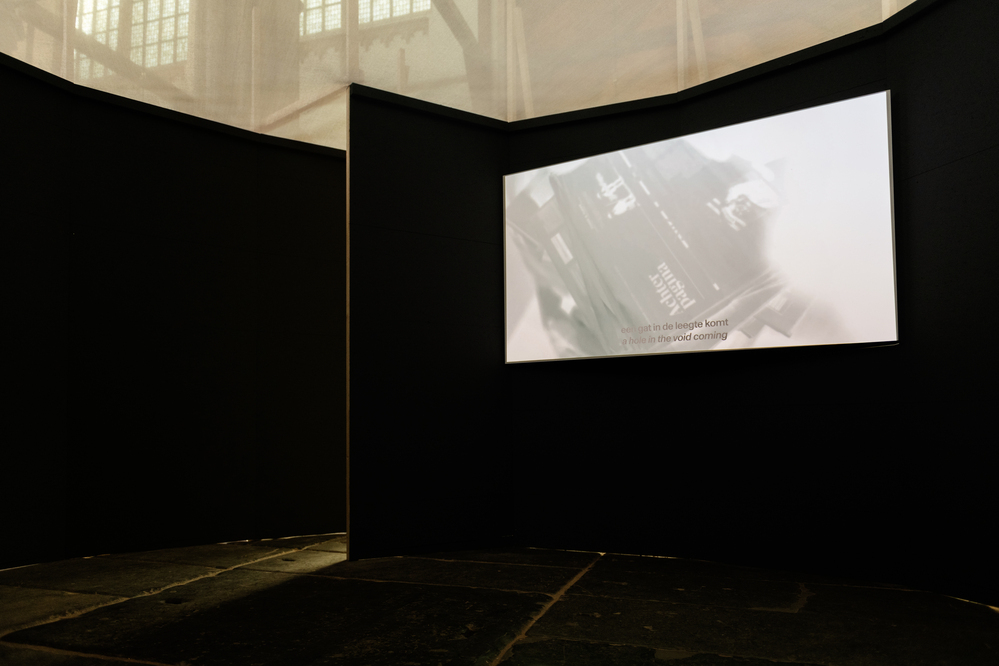
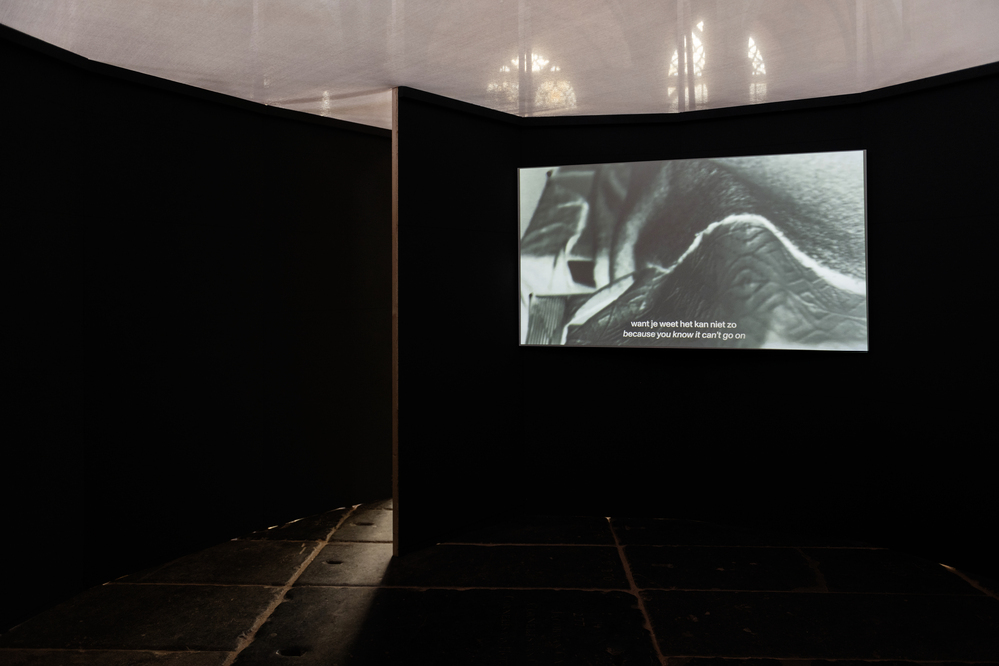
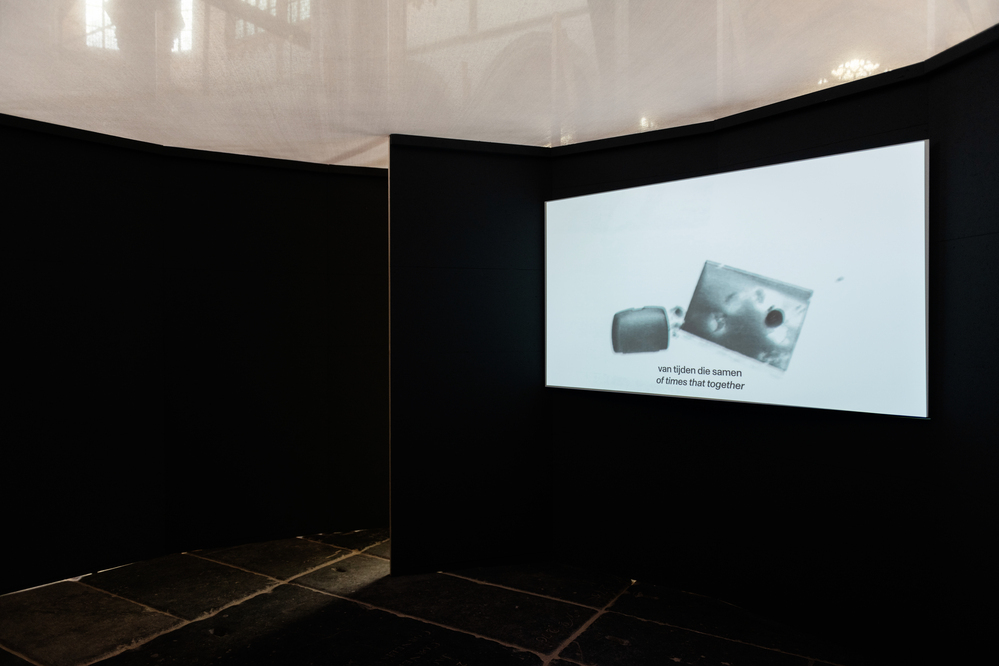
June 2020, an exhibition by Aimée Zito Lema was to open in the Oude Kerk, but due to the corona crisis the opening was pushed back to 2021. So rather than setting up her show, Zito Lema was home-schooling her daughter, who was just learning to read. Her contribution consisted of a short film and the following text:
The Universal Declaration of Human Rights, which was adopted by the UN General Assembly on 10 December 1948, was the result of the horrific experience of the Second World War.
What should our Universal Rights be today?
Should we learn to re-read? Rewrite?
The documentation of an intimate space, the world inside my house, weeks in isolation, the social distancing, the waiting, time and space hanging, quietly, differently, seen through a filter, a change of view. An X-ray of my environment, the routines, the space where I feel safe, the things I take for granted.
From this intimate space, I wonder: Is there any human right even possible if it is not universal? Are my freedom, my right to justice, my health, my love, my shelter, my passport, my vote, my clothing, my food, possible if it’s not shared universally? How real, how desirable is it then?
In these weeks of quarantine, many things have altered its regular order. Myself as many parents, have become home-teachers of our children. Learning to read, is what my daughter is doing every day these days.
Learning to read. Learning to write.
Voice: Mia Blaton Text: Based on the poem Nieuwte that Mona Thomasse wrote during a writing workshop that took place in the Oude Kerk and was organized by Aimée Zito Lema in collaboration with poetry teacher Dasja Koot.
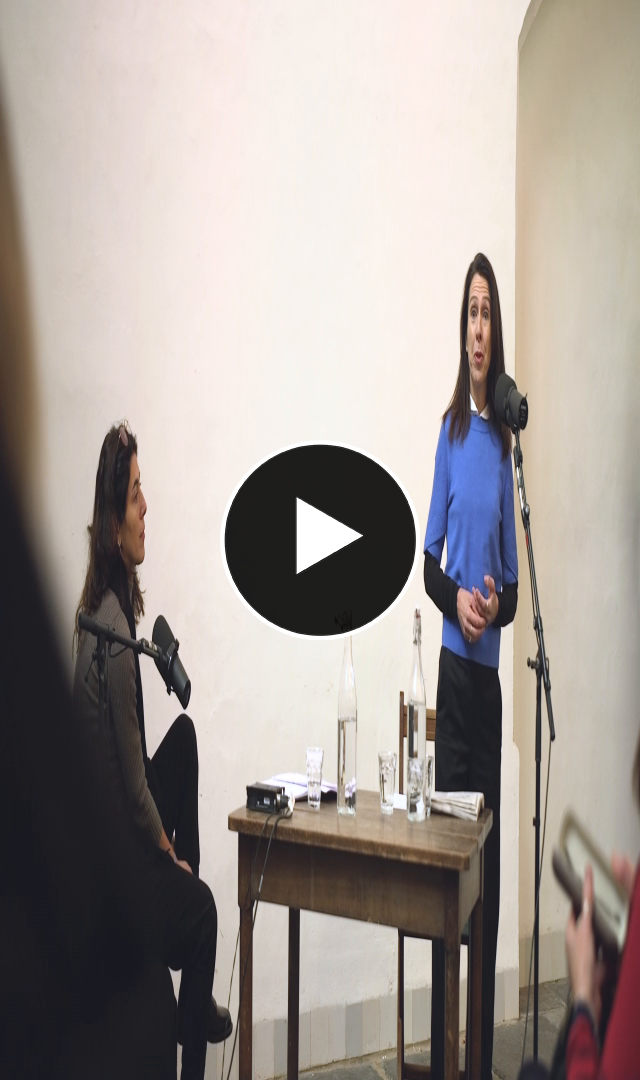
Additionally, on Sunday the 29th of November 2020, Zito Lema was interviewed by Luuk Heezen, after which visitors could ask her questions.
The pace of change and the emergence of new artists is high and the broadcasting time for contemporary art is modest. That is why Mister Motley, together with presenter Luuk Heezen, is creating the radio programme Kunst is Lang: a conversation in which a contemporary artist is given 45 minutes to talk about his or her art, the artistry, and the world view that lies behind it.
| Artist | Zito Lema, Aimée Blaton, Mia |
| Period | 19-09-2020 – 21-03-2021 |
| Location | Sint-Joriskapel |
The World After: Conversation Pieces: Newness
June 2020, an exhibition by Aimée Zito Lema was to open in the Oude Kerk, but due to the corona crisis the opening was pushed back to 2021. So rather than setting up her show, Zito Lema was home-schooling her daughter, who was just learning to read. Her contribution consisted of a short film and the following text:
The Universal Declaration of Human Rights, which was adopted by the UN General Assembly on 10 December 1948, was the result of the horrific experience of the Second World War.
What should our Universal Rights be today?
Should we learn to re-read? Rewrite?
The documentation of an intimate space, the world inside my house, weeks in isolation, the social distancing, the waiting, time and space hanging, quietly, differently, seen through a filter, a change of view. An X-ray of my environment, the routines, the space where I feel safe, the things I take for granted.
From this intimate space, I wonder: Is there any human right even possible if it is not universal? Are my freedom, my right to justice, my health, my love, my shelter, my passport, my vote, my clothing, my food, possible if it’s not shared universally? How real, how desirable is it then?
In these weeks of quarantine, many things have altered its regular order. Myself as many parents, have become home-teachers of our children. Learning to read, is what my daughter is doing every day these days.
Learning to read. Learning to write.
Voice: Mia Blaton Text: Based on the poem Nieuwte that Mona Thomasse wrote during a writing workshop that took place in the Oude Kerk and was organized by Aimée Zito Lema in collaboration with poetry teacher Dasja Koot.
Additionally, on Sunday the 29th of November 2020, Zito Lema was interviewed by Luuk Heezen, after which visitors could ask her questions.
The pace of change and the emergence of new artists is high and the broadcasting time for contemporary art is modest. That is why Mister Motley, together with presenter Luuk Heezen, is creating the radio programme Kunst is Lang: a conversation in which a contemporary artist is given 45 minutes to talk about his or her art, the artistry, and the world view that lies behind it.
Gallery
Connections
Part of
Read more
Identifiers and references
| Oude kerk Adlib Collect priref | 2178 |