Here Is Where We Meet: Footnote
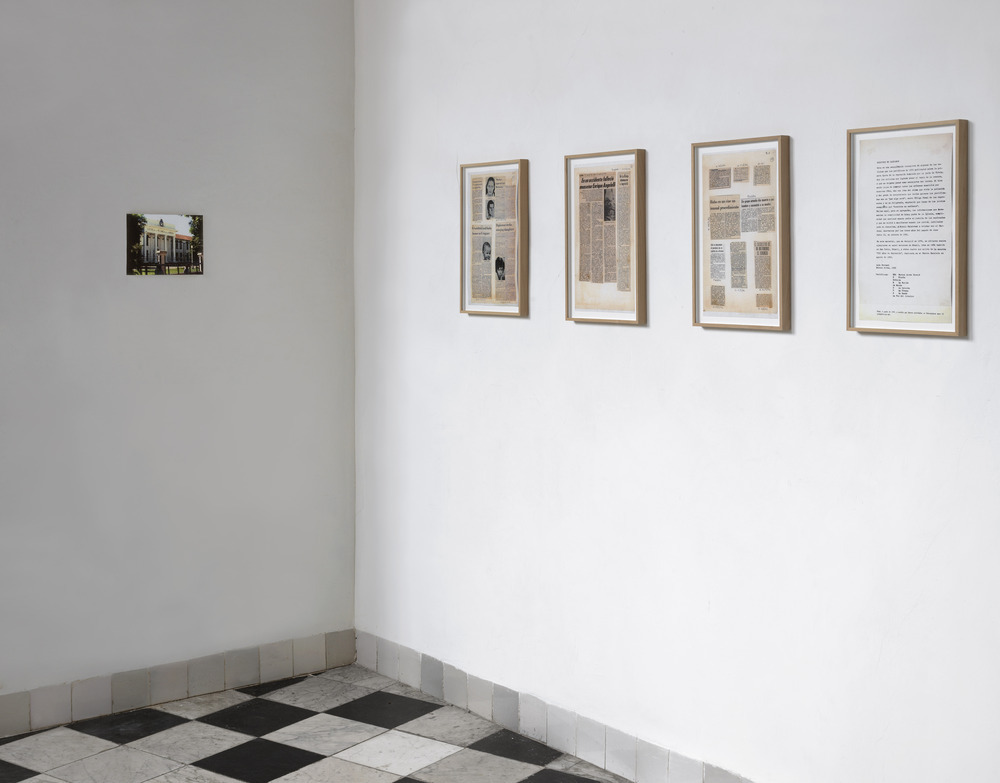
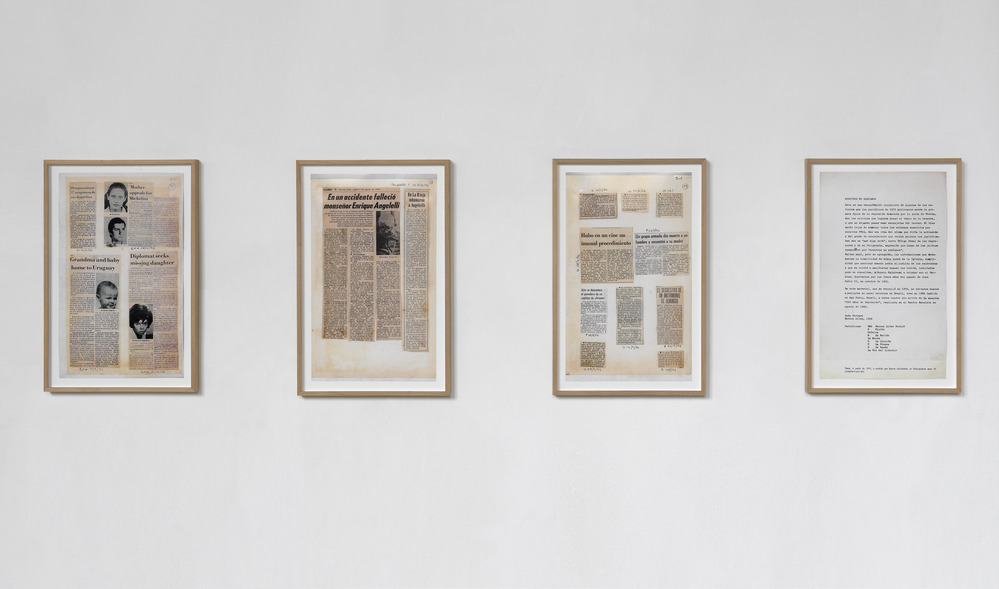
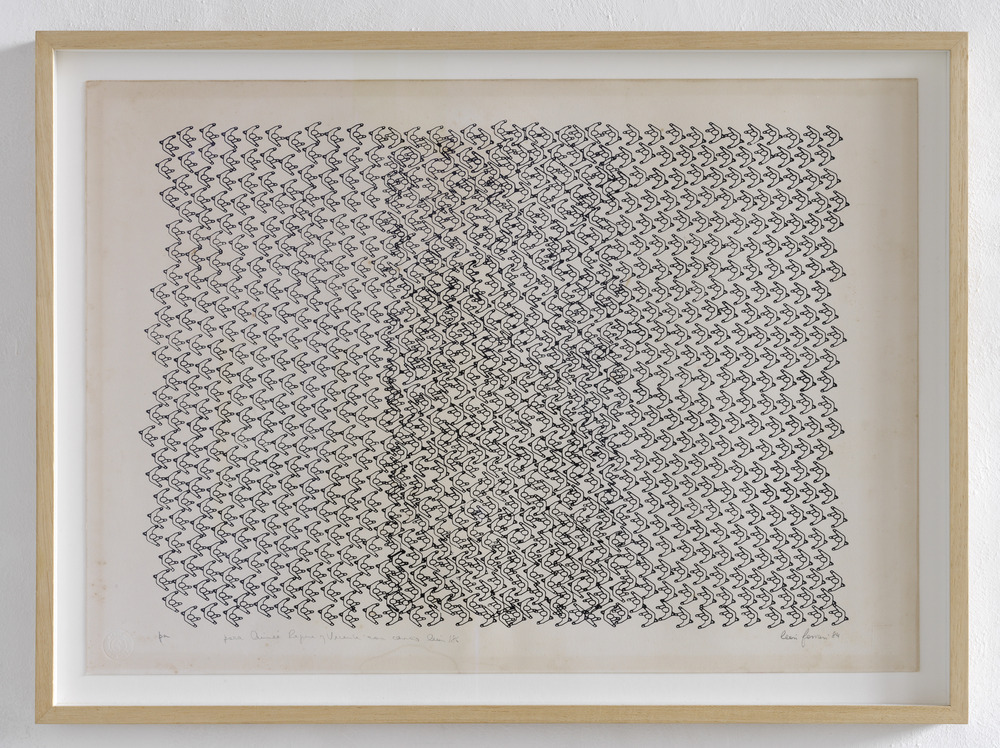
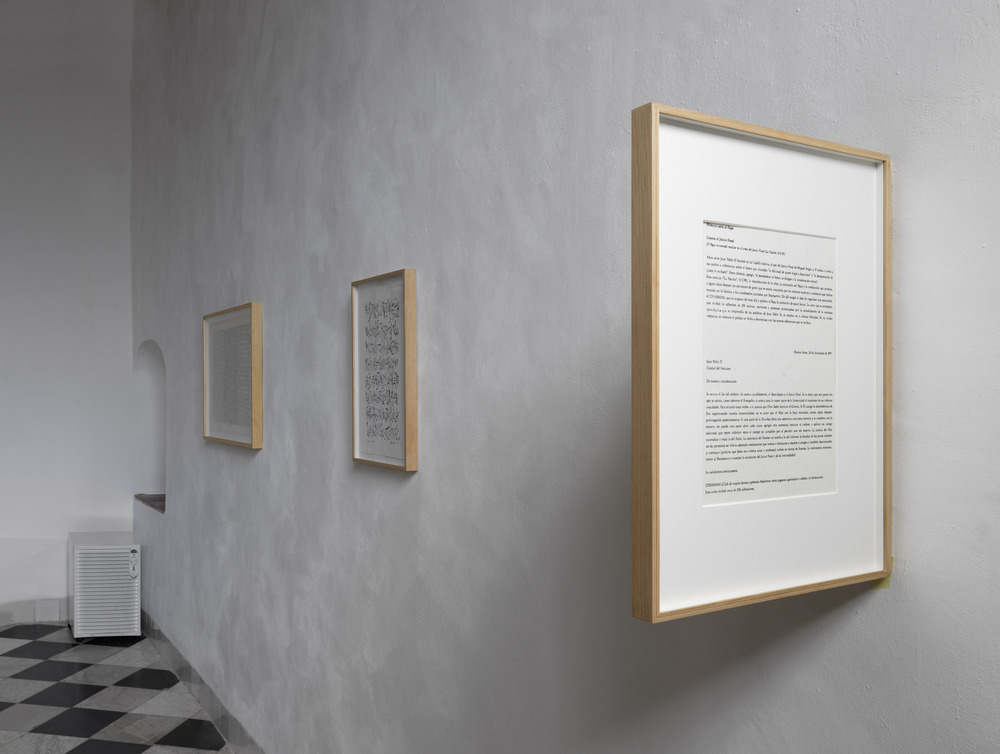
A small presentation of work by Argentinian artist Léon Ferrari (1920-2013), with whom Aimée Zito Lema 's work connects, was on display in the lecture room. She grew up with his work. During the lockdown, she delved into his work again. In the context of her research for the exhibition, another connection with his work emerged for her, specifically in the search and questions about the relationship between image and language, in the context of resistance. Thus, the idea of a 'footnote exhibition' of his work was born. Through his poems, collages and even a letter to the Pope, he warned against a "cruelty intimately mixed with the kindness that covers it. The artist's personal life, relationship to religion and the geo-political developments of his time are strongly recognisable in the seven works on paper on display in the College Room.
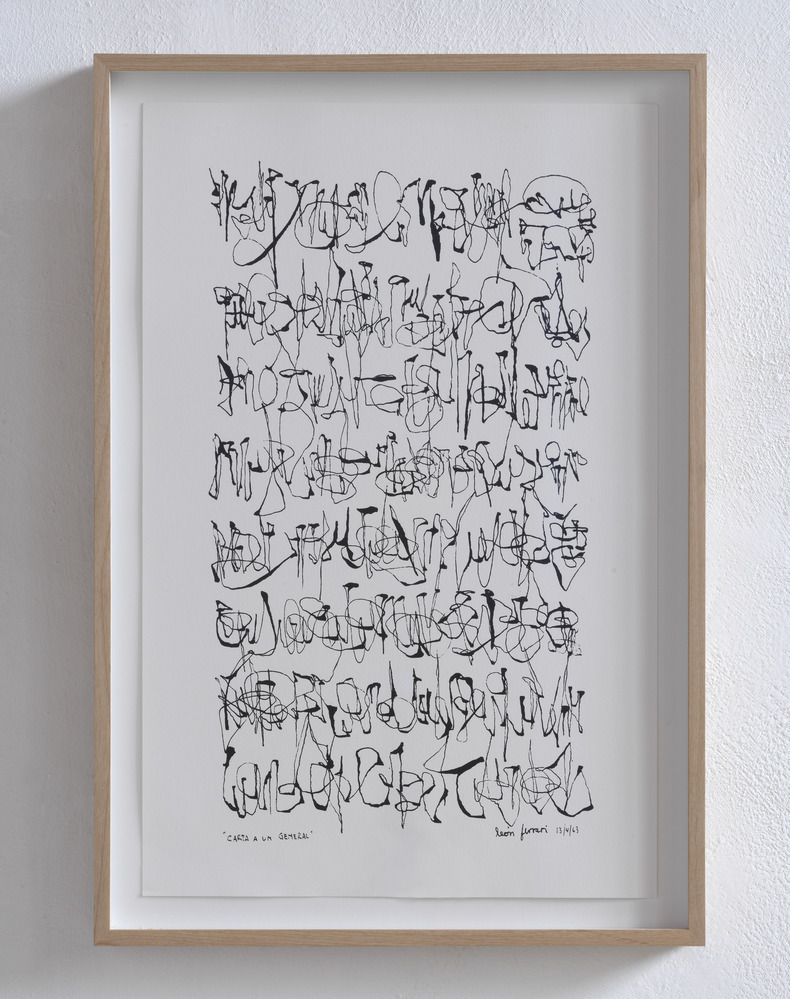
Argentine artist León Ferrari (Buenos Aires, 1920-2013) is considered one of Latin America's most important contemporary artists. In his work, Ferrari responds to the influence of Western, Christian civilisation on South America, the periods of dictatorship in Argentina and the role the church played in it. Letter to a General (Carta a un general, 1963) asks the question: what is being said by this unreadable letter? Both the indefinite article in the title ('a general'/'un general') and the illegibility of the work mean that its meaning is not definitive. It later proved predictive as Argentina's army would be the protagonist of later coups, in 1966 and 1976. Ferrari himself revealed years later that it wasdifficult to write a reasonable letter to a general, one that was artistic and not a mere insult. Faced with the helplessness of not knowing how, unable to express his anger against an illegitimate authority, he chose the illegible script. 'The way of writing, drawing words, is part of their meaning, just like the tone of the voice that utters them. And I write drawings to tell thoughts, images that words cannot tell' (León Ferrari, May 1996).
| Artist | Ferrari, Léon |
| Period | 05-06-2021 – 22-08-2021 |
| Location | Collegekamer |
Here Is Where We Meet: Footnote
A small presentation of work by Argentinian artist Léon Ferrari (1920-2013), with whom Aimée Zito Lema 's work connects, was on display in the lecture room. She grew up with his work. During the lockdown, she delved into his work again. In the context of her research for the exhibition, another connection with his work emerged for her, specifically in the search and questions about the relationship between image and language, in the context of resistance. Thus, the idea of a 'footnote exhibition' of his work was born. Through his poems, collages and even a letter to the Pope, he warned against a "cruelty intimately mixed with the kindness that covers it. The artist's personal life, relationship to religion and the geo-political developments of his time are strongly recognisable in the seven works on paper on display in the College Room.
Argentine artist León Ferrari (Buenos Aires, 1920-2013) is considered one of Latin America's most important contemporary artists. In his work, Ferrari responds to the influence of Western, Christian civilisation on South America, the periods of dictatorship in Argentina and the role the church played in it. Letter to a General (Carta a un general, 1963) asks the question: what is being said by this unreadable letter? Both the indefinite article in the title ('a general'/'un general') and the illegibility of the work mean that its meaning is not definitive. It later proved predictive as Argentina's army would be the protagonist of later coups, in 1966 and 1976. Ferrari himself revealed years later that it wasdifficult to write a reasonable letter to a general, one that was artistic and not a mere insult. Faced with the helplessness of not knowing how, unable to express his anger against an illegitimate authority, he chose the illegible script. 'The way of writing, drawing words, is part of their meaning, just like the tone of the voice that utters them. And I write drawings to tell thoughts, images that words cannot tell' (León Ferrari, May 1996).
Gallery
Connections
Part of
Read more
Identifiers and references
| Oude kerk Adlib Collect priref | 2189 |