Here Is Where We Meet: Textile
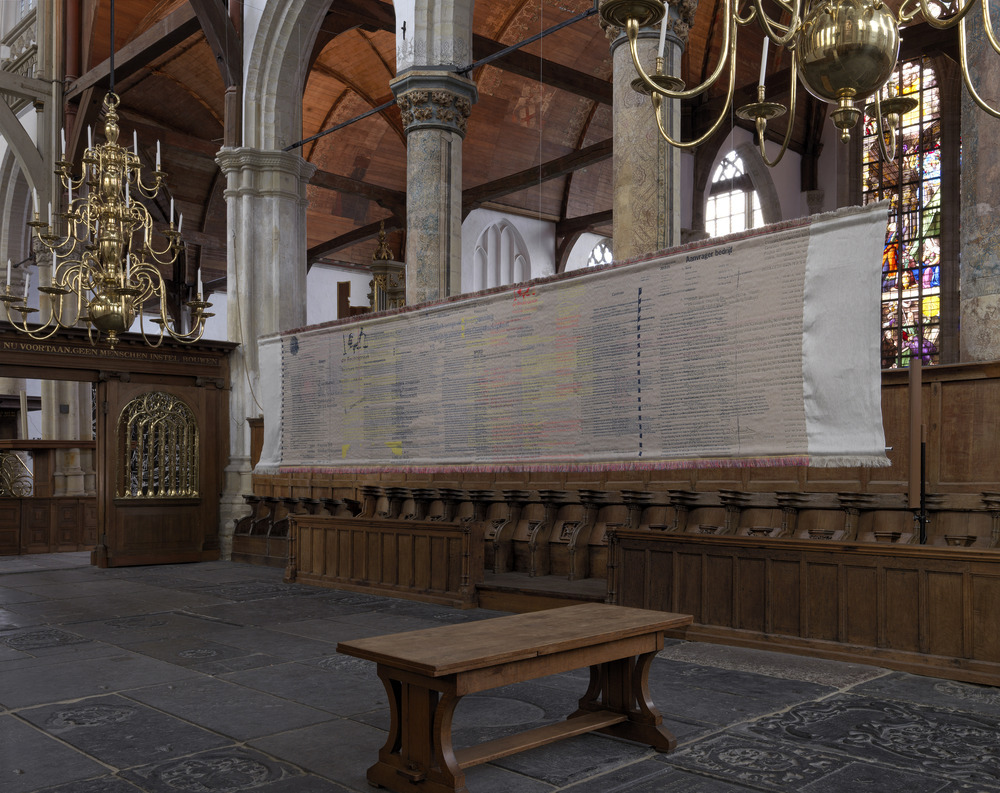
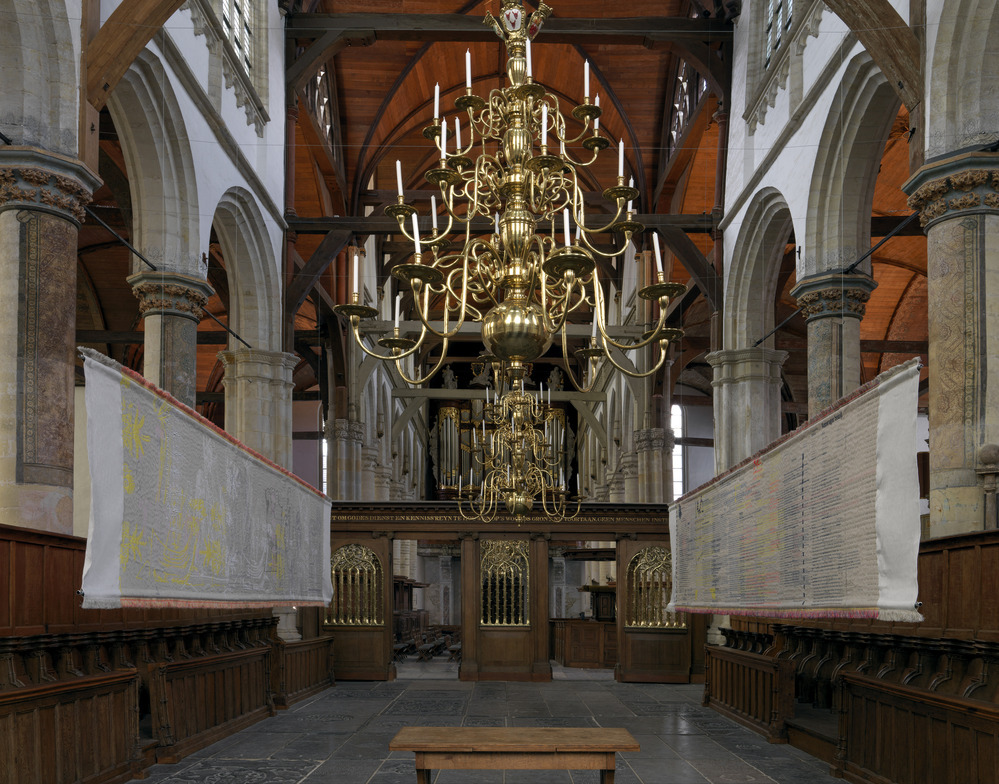
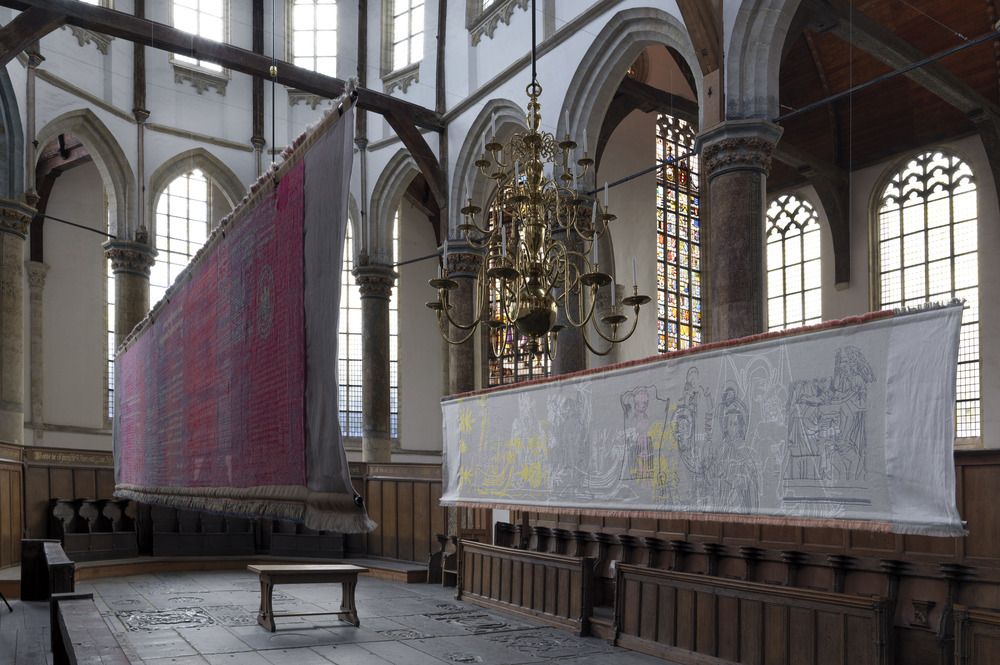
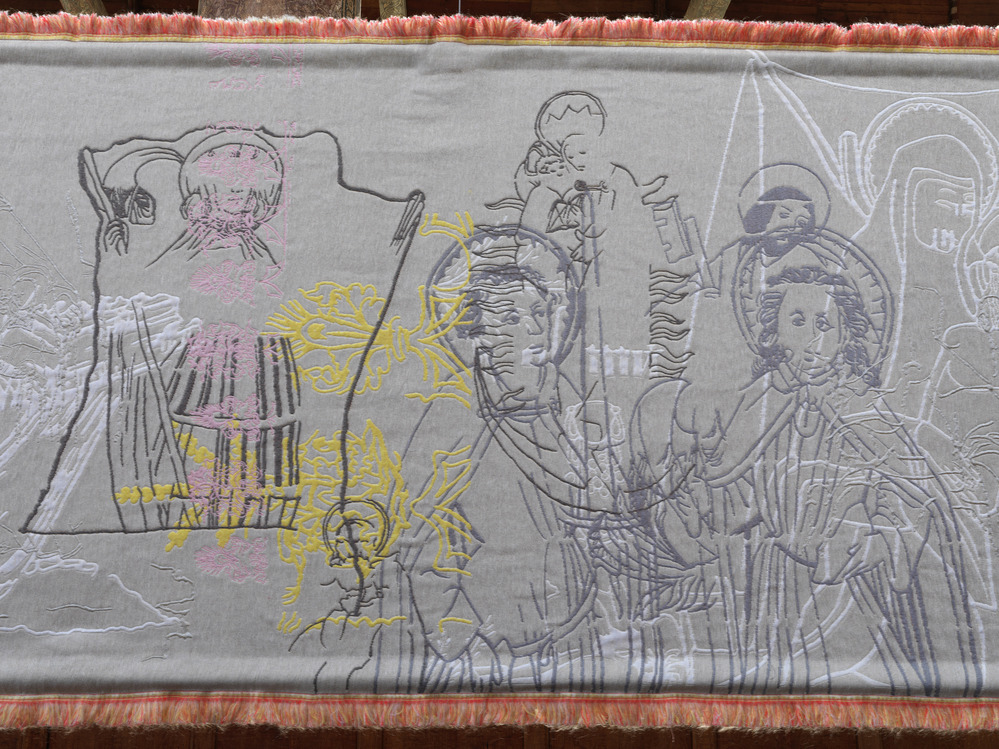
Argentinian artist Aimee Zito Lema hung two woven tapestries of 160 x 900 cm each in the High Choir. The two tapestries were inspired by a reconstruction of four tapestries that disappeared and for which the artist Maarten van Heemskerck (1498-1574) made the designs around 1560. Maarten van Heemskerck is one of the most important Dutch painters of the sixteenth century. The four tapestries, measuring about 1.80 x 7.15 metres, hung on either side of the high choir and depicted scenes from the lives of St Nicholas and John the Baptist, both patron saints of Oude Kerk. The tapestries survived the iconoclasm, probably because they hung too high for the rioters, and were still in use in the seventeenth century at weddings - decorating the ceremony.
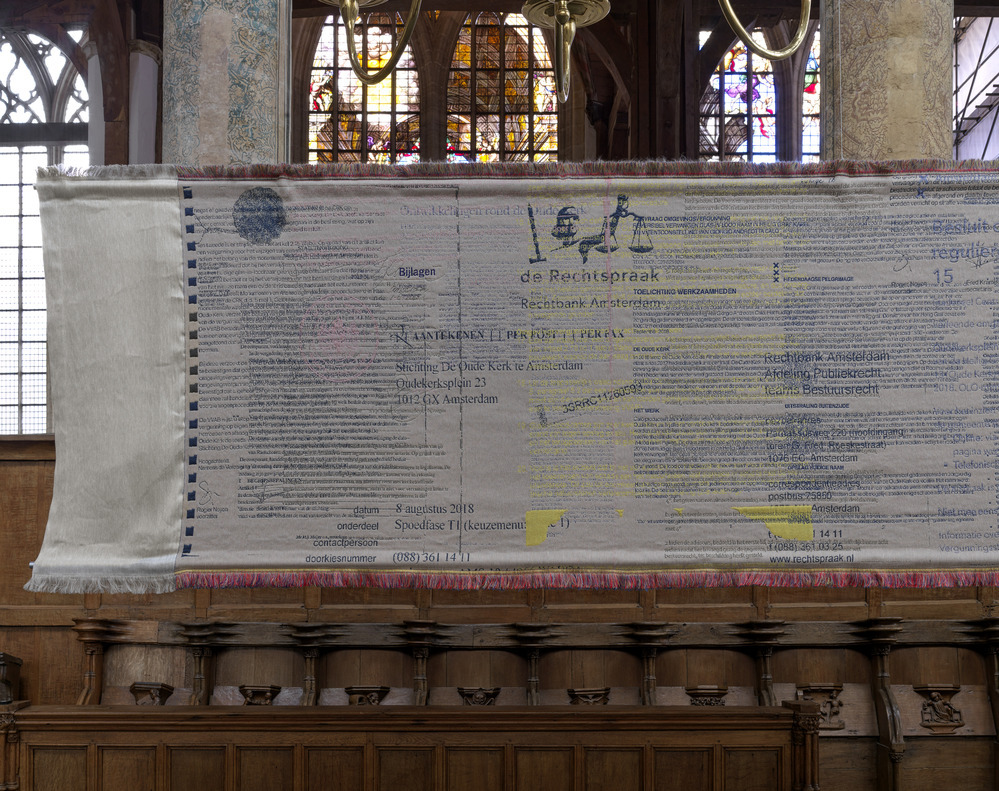
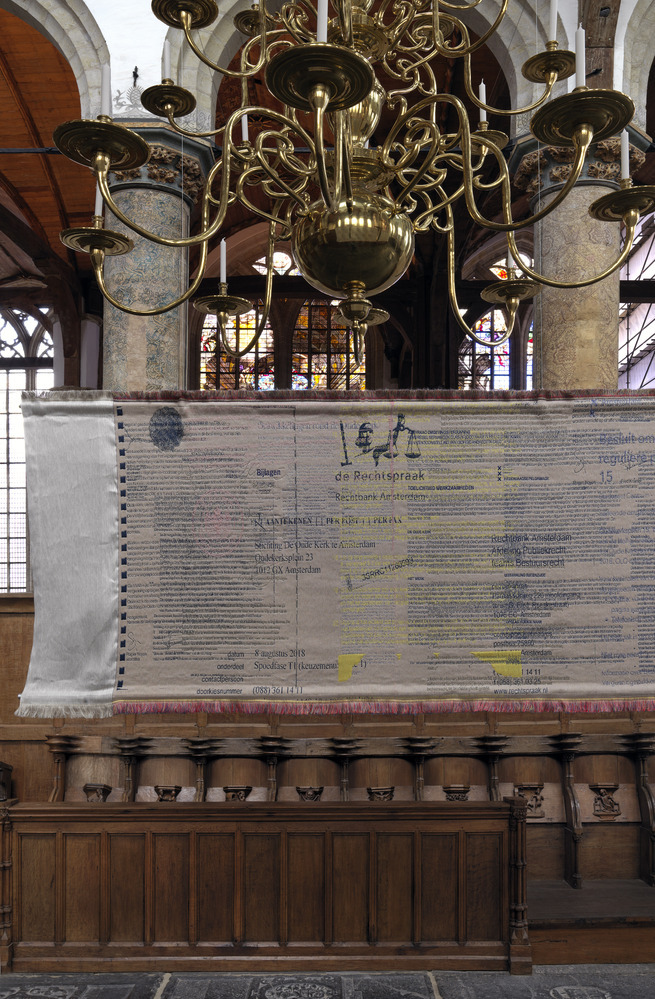
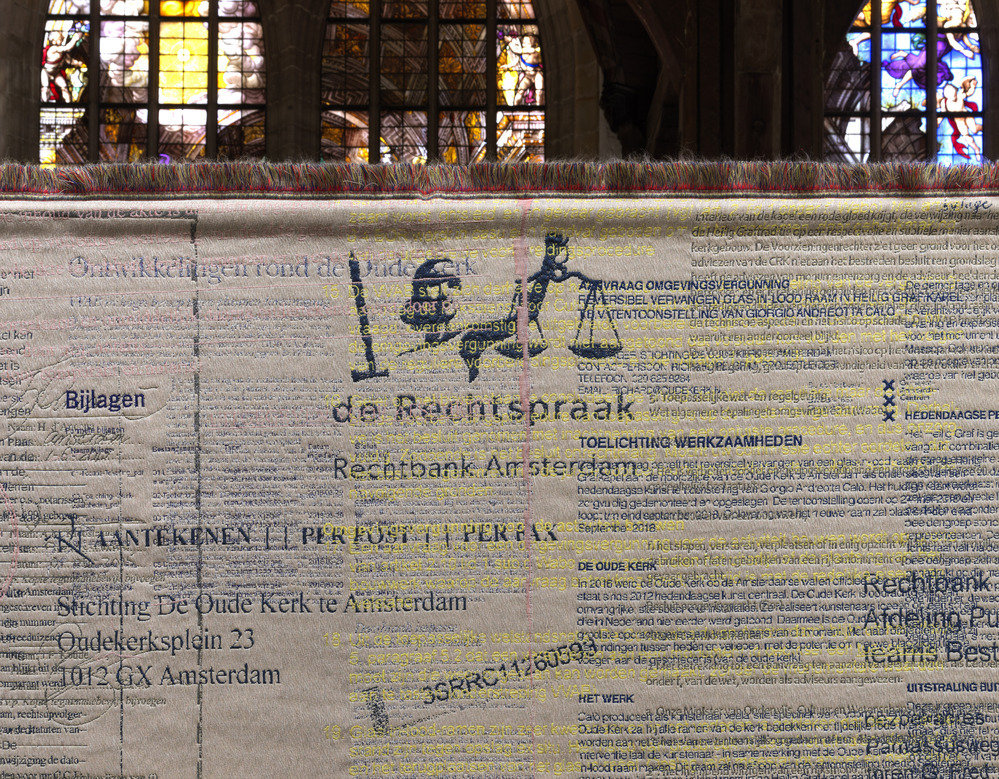
The images on the tapestries made by Aimée Zito Lema are based on the outlines of the original vault paintings dating from the Roman Catholic period of the Oude Kerk. The left tapestry, viewed from the east, featured a woven composition containing scanned documents of a selection of legal documents and formal correspondence relating to the installation of a red window in the Holy Sepulchre Chapel. The legal process took three years (2018-2021), with the Council of State declared the objections unfounded.
| Artist | Zito Lema, Aimée |
| Location | Hoogkoor |
Here Is Where We Meet: Textile
Argentinian artist Aimee Zito Lema hung two woven tapestries of 160 x 900 cm each in the High Choir. The two tapestries were inspired by a reconstruction of four tapestries that disappeared and for which the artist Maarten van Heemskerck (1498-1574) made the designs around 1560. Maarten van Heemskerck is one of the most important Dutch painters of the sixteenth century. The four tapestries, measuring about 1.80 x 7.15 metres, hung on either side of the high choir and depicted scenes from the lives of St Nicholas and John the Baptist, both patron saints of Oude Kerk. The tapestries survived the iconoclasm, probably because they hung too high for the rioters, and were still in use in the seventeenth century at weddings - decorating the ceremony.
The images on the tapestries made by Aimée Zito Lema are based on the outlines of the original vault paintings dating from the Roman Catholic period of the Oude Kerk. The left tapestry, viewed from the east, featured a woven composition containing scanned documents of a selection of legal documents and formal correspondence relating to the installation of a red window in the Holy Sepulchre Chapel. The legal process took three years (2018-2021), with the Council of State declared the objections unfounded.
Gallery
Connections
Part of
Read more
Identifiers and references
| Oude kerk Adlib Collect priref | 2329 |