Hoogkoor: Choir Screen in kwab style
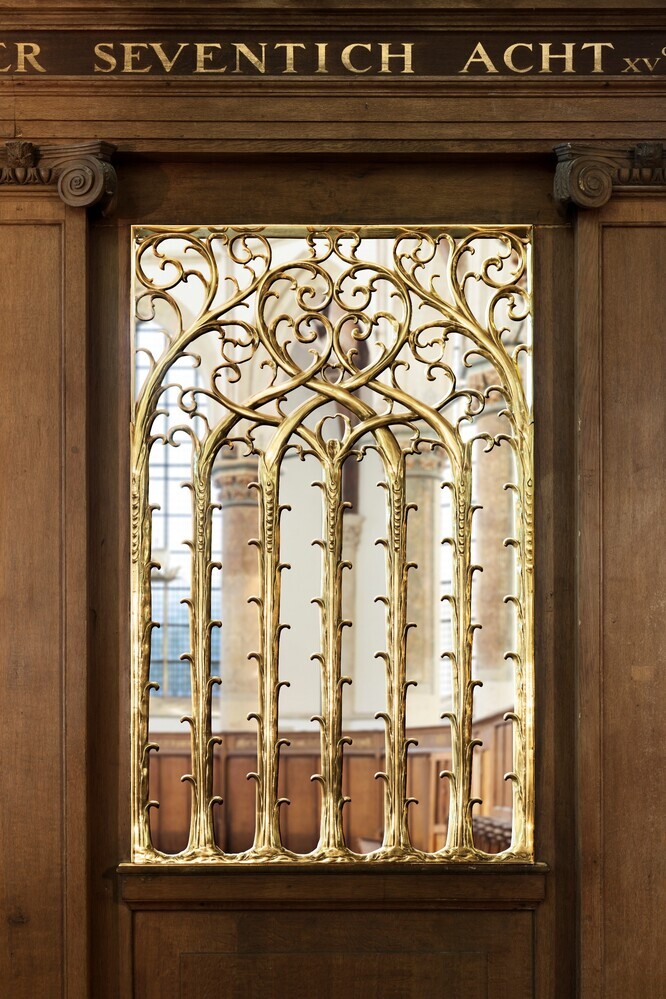
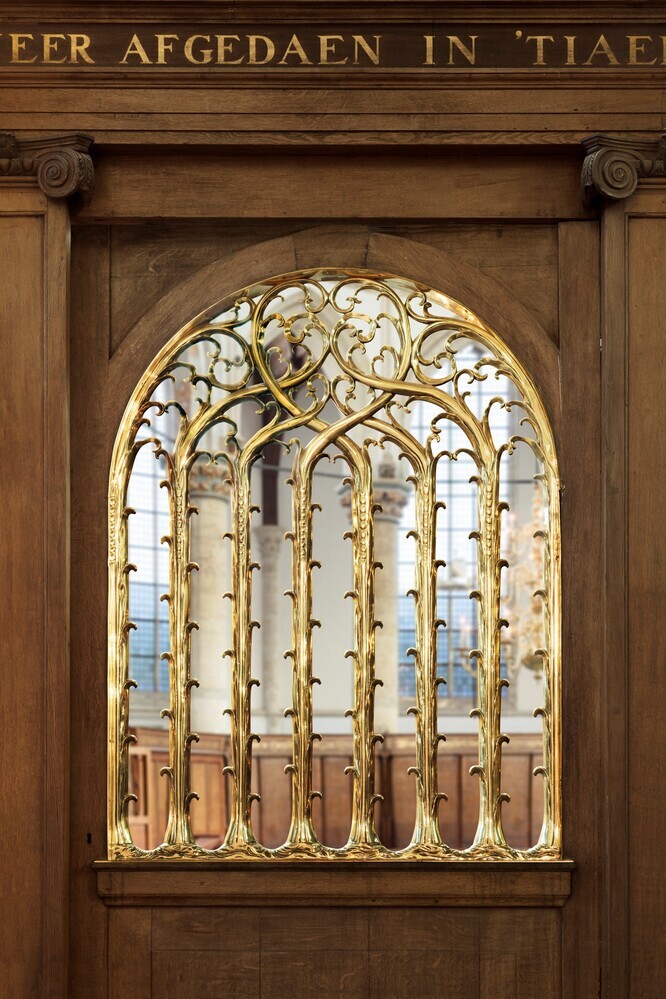
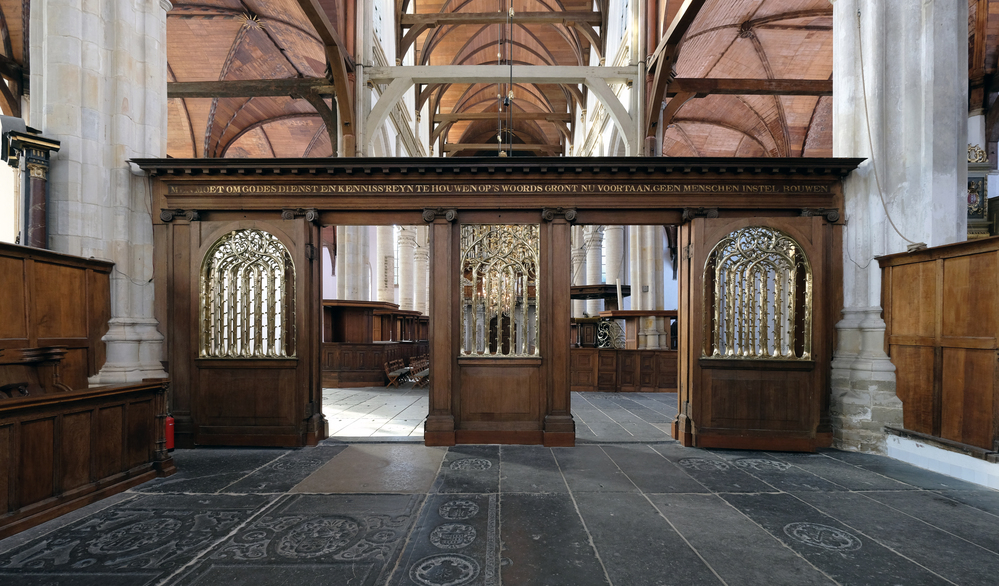
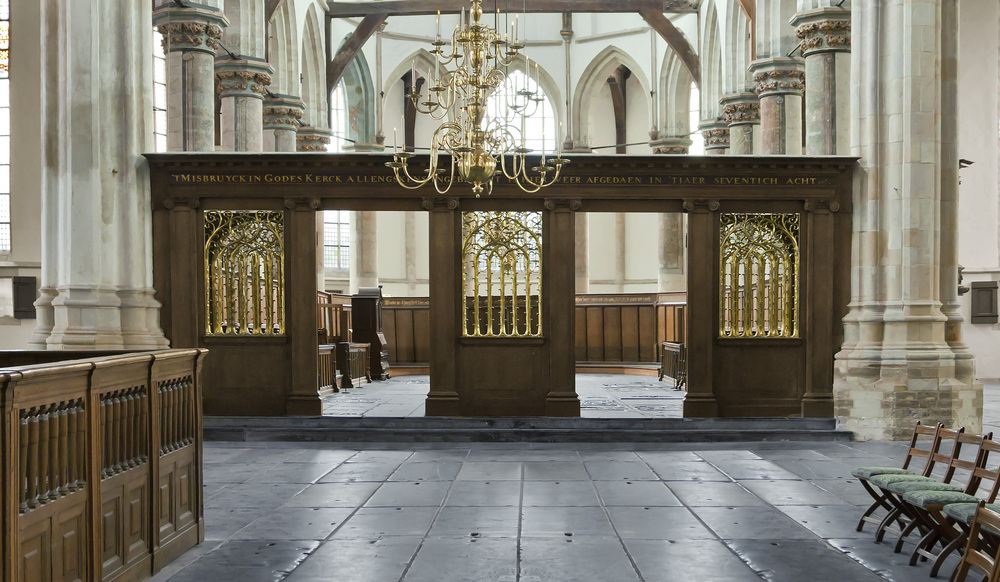
In 1681, the Oude Kerk received a new Choir Screen , to replace the previous screen that was placed directly after the Alteration . Although this later version of the choir screen was classical in design, with wooden bays and a copper latticework, the brass casting is a highlight of the kwab style.
Read more| Artist | Adriaen Cuyper Adriaen de Jonge Johannes Lutma (II) Gillis Wijbrandts |
| Period | 17th century |
| Location | Hoogkoor |
| Material | wood gold leaf copper messing yellow copper |
Hoogkoor: Choir Screen in kwab style
In 1681, the Oude Kerk received a new Choir Screen , to replace the previous screen that was placed directly after the Alteration . Although this later version of the choir screen was classical in design, with wooden bays and a copper latticework, the brass casting is a highlight of the kwab style.
Read moreGallery
Connections
Part of
Read more
Identifiers and references
| Oude kerk Adlib Collect priref | 1878 |