Into the Air: Labyrinth
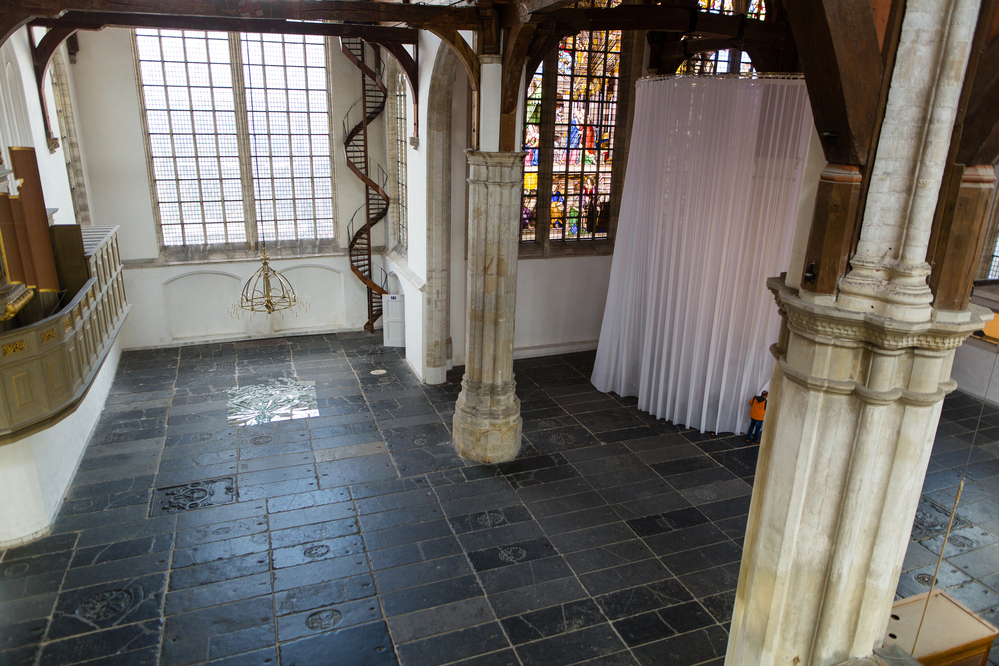
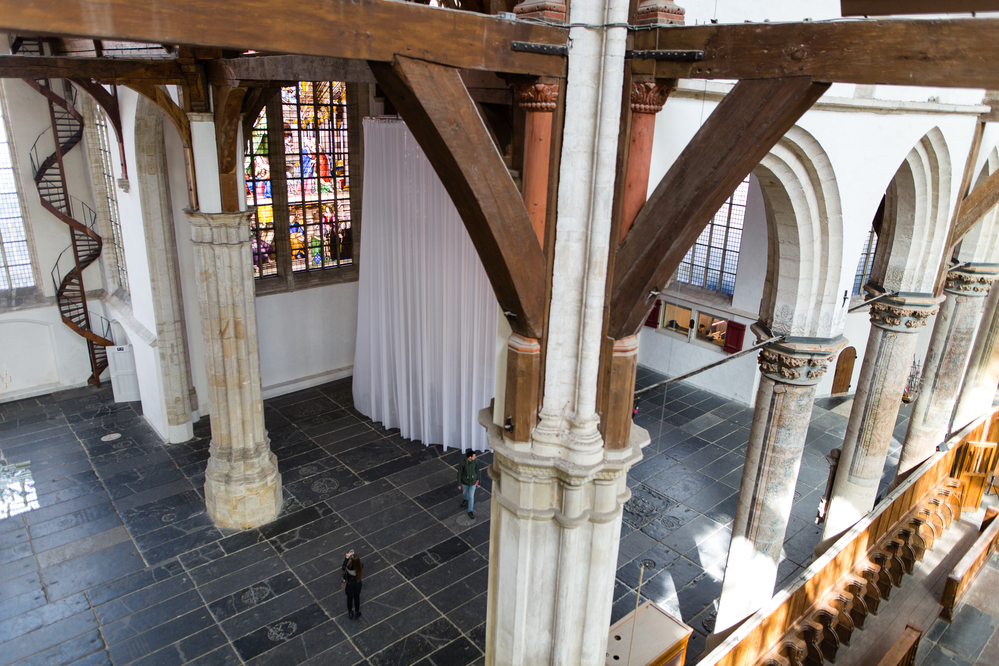
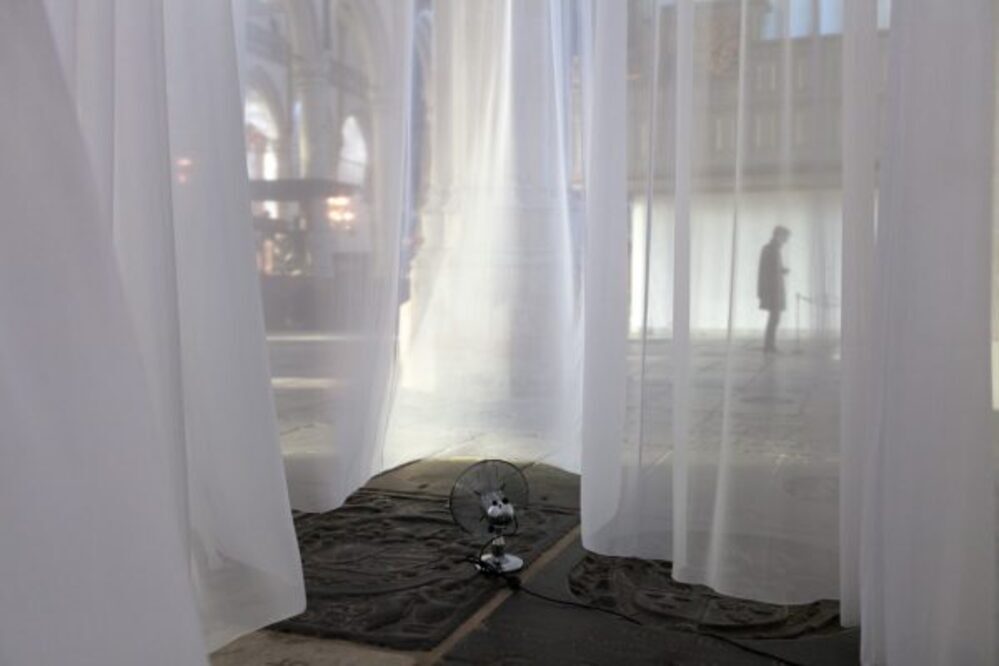
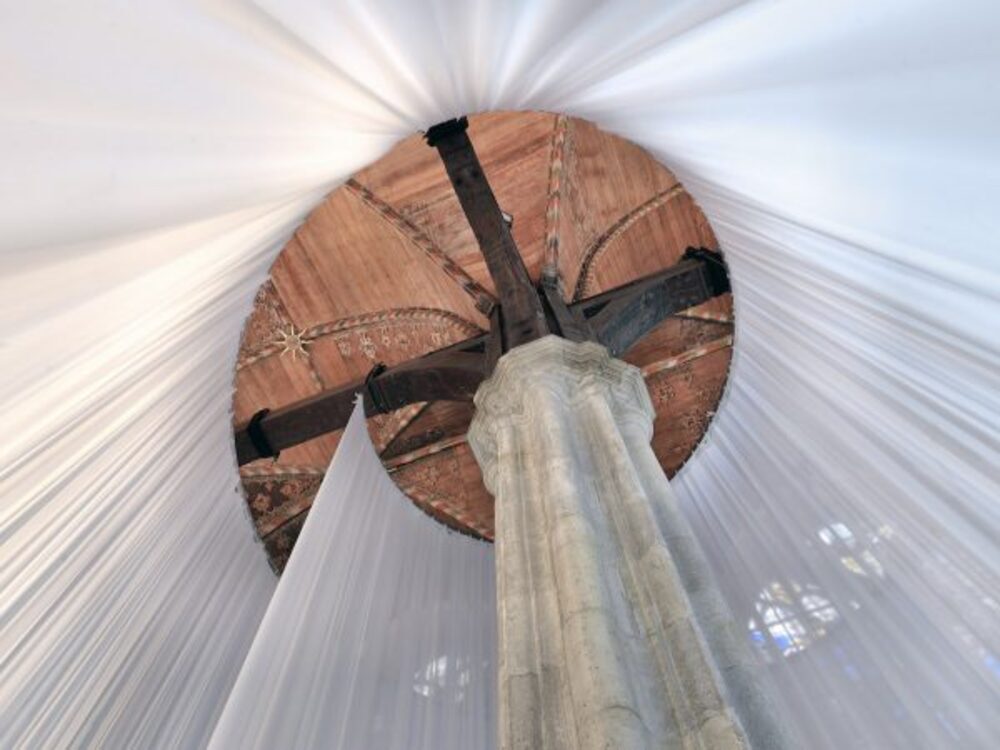
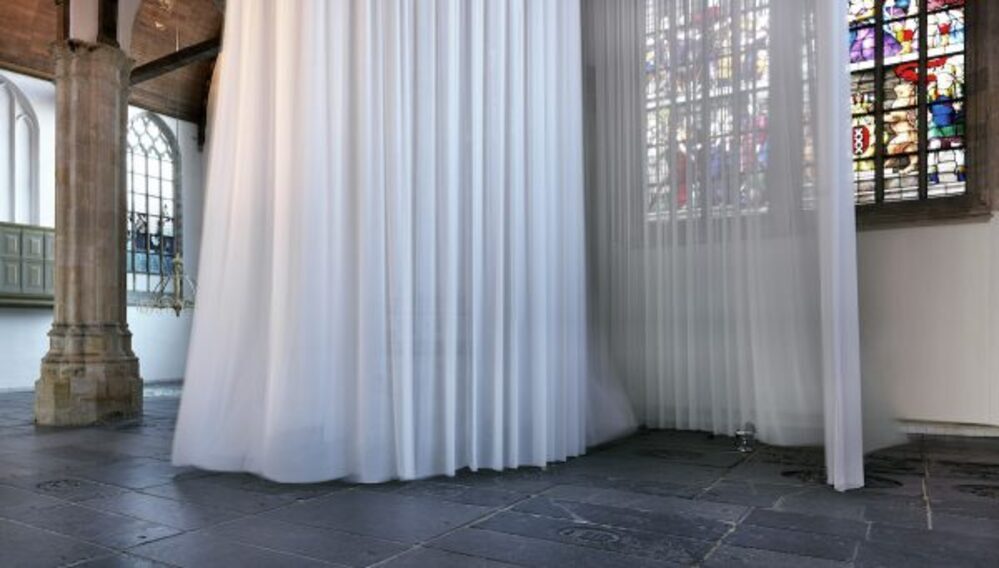
Meter-long, semi-transparent canvases hung in the Lady Chapel, forming a trail or labyrinth around the thickest colum in the Chapel in which the visitor disappeared and appeared. The cloths moved gently in the wind that blew out of a number of fans. The canvases hung high (about 7 meters) and camouflaged parts of the church, making the architecture sometimes visible, sometimes invisible in an unexpected way.
Labyrinths already existed in Europe +/- 6000 years ago. People of that time were already looking for the interior, the center the Zenit, the Heaven and the Other Side. The labyrinth is a symbol. You will find it in the Etruscans, Indians, Cretans, Normans, Indonesians, in Islam the labyrinth is a symbol for heroism and eternal life. You can find the labyrinth in early Christianity to this day. In this installation, the column forms the center of the labyrinth. As an architectural form in classical cultures, the column originated in Egypt and later taken over by the Greeks and Romans.
With this work Boezem created a natural passage through space and time. Through the canvases, the visitors could only end up at the pillar of the Oude Kerk, as a carrier of our culture. You could keep circling this pillar endlessly; the labyrinth had no end.
| Artist | Boezem, Marinus |
| Period |
21st century
(2016 – 2017) |
| Location | Mariakapel |
Into the Air: Labyrinth
Meter-long, semi-transparent canvases hung in the Lady Chapel, forming a trail or labyrinth around the thickest colum in the Chapel in which the visitor disappeared and appeared. The cloths moved gently in the wind that blew out of a number of fans. The canvases hung high (about 7 meters) and camouflaged parts of the church, making the architecture sometimes visible, sometimes invisible in an unexpected way.
Labyrinths already existed in Europe +/- 6000 years ago. People of that time were already looking for the interior, the center the Zenit, the Heaven and the Other Side. The labyrinth is a symbol. You will find it in the Etruscans, Indians, Cretans, Normans, Indonesians, in Islam the labyrinth is a symbol for heroism and eternal life. You can find the labyrinth in early Christianity to this day. In this installation, the column forms the center of the labyrinth. As an architectural form in classical cultures, the column originated in Egypt and later taken over by the Greeks and Romans.
With this work Boezem created a natural passage through space and time. Through the canvases, the visitors could only end up at the pillar of the Oude Kerk, as a carrier of our culture. You could keep circling this pillar endlessly; the labyrinth had no end.
Gallery
Connections
Part of
Read more
Identifiers and references
| Oude kerk Adlib Collect priref | 2158 |