Monuments: Colonies
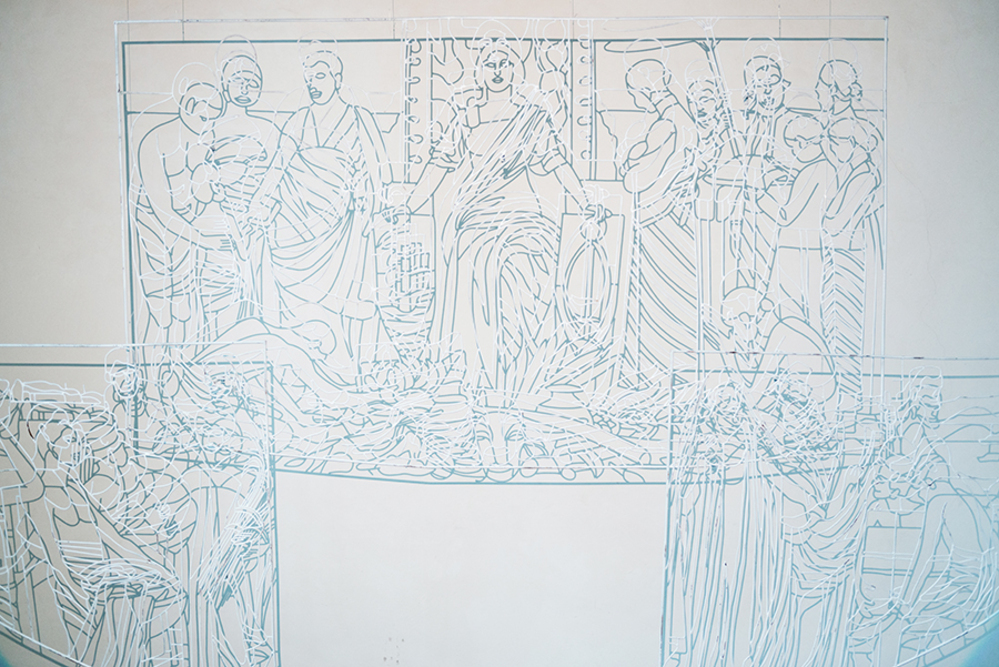
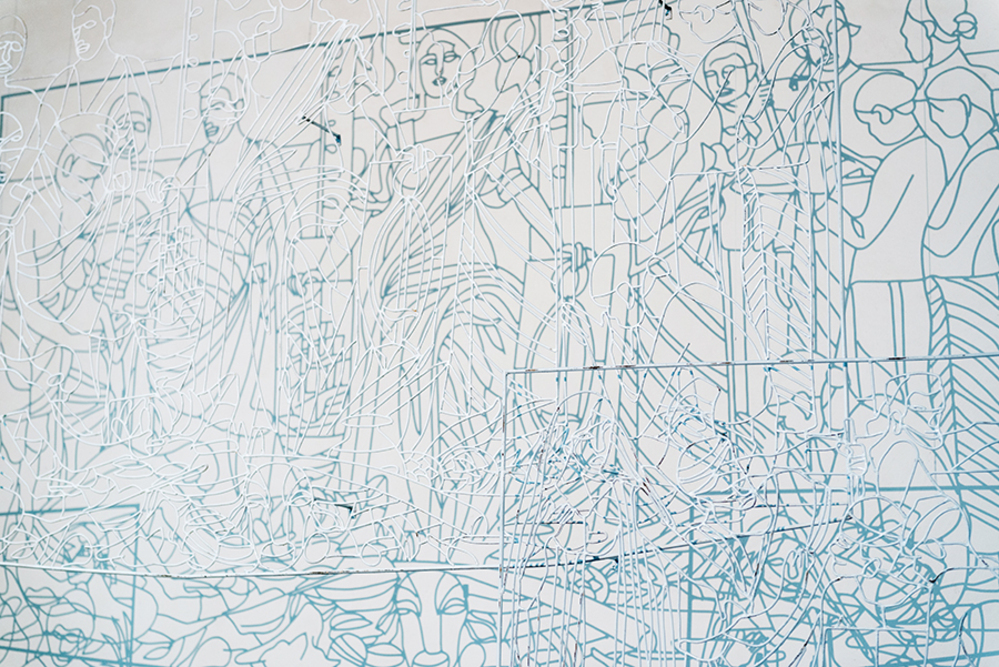
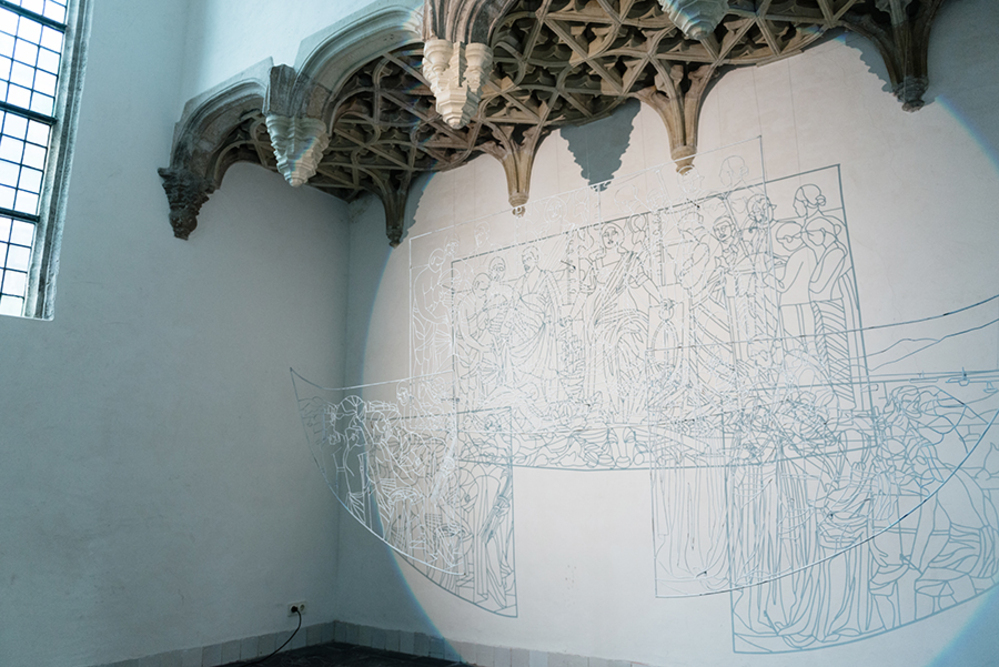
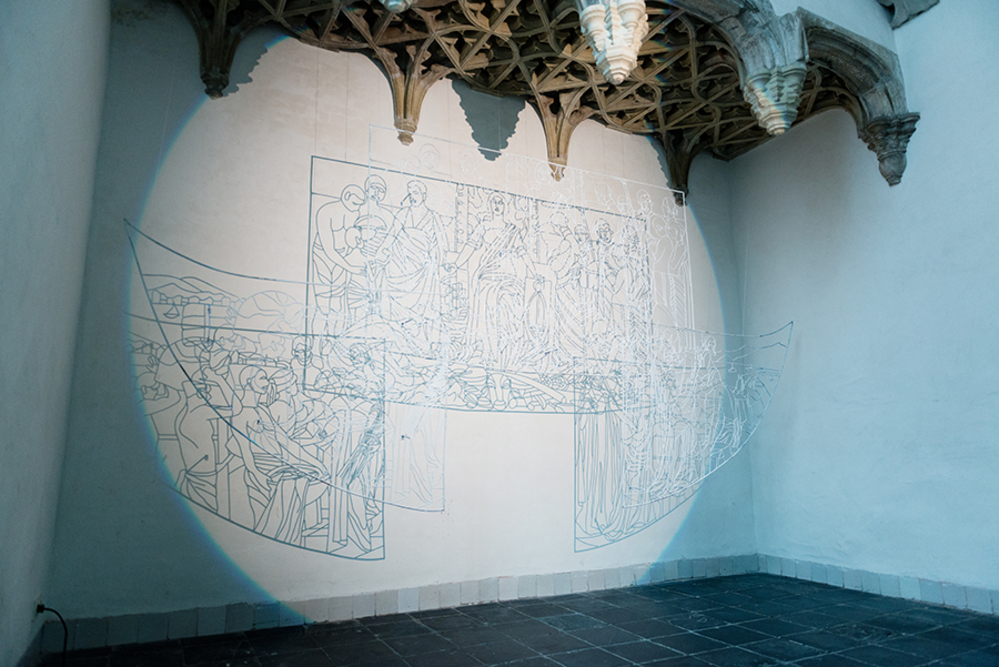
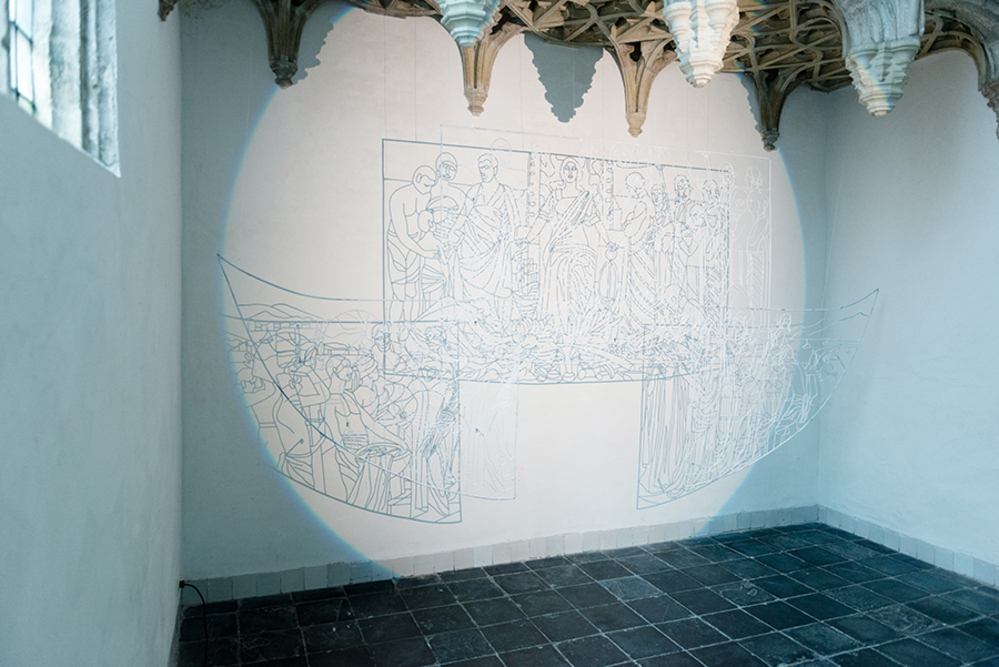
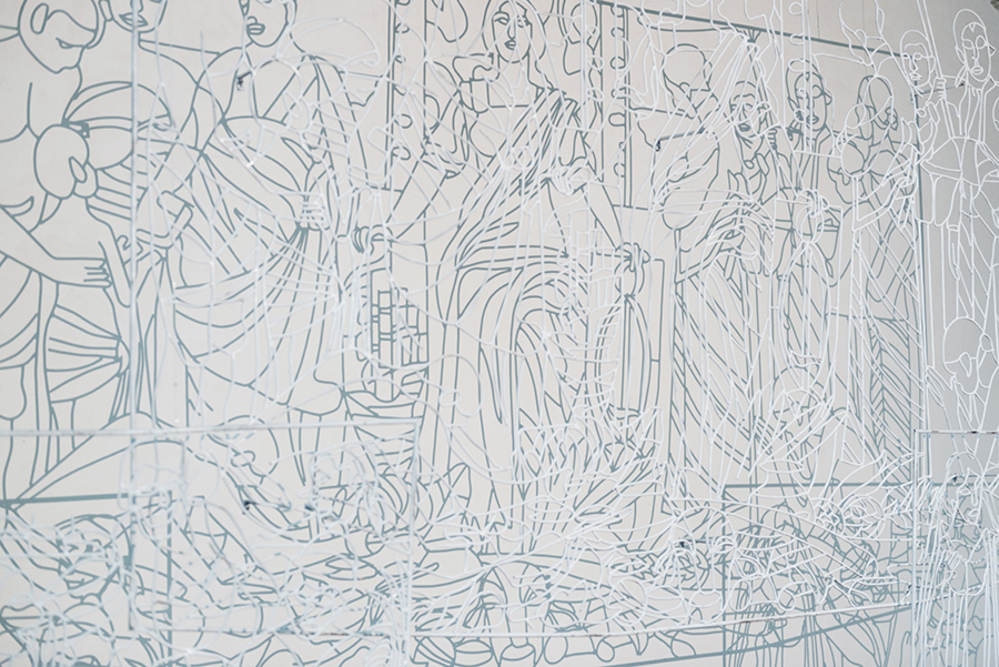
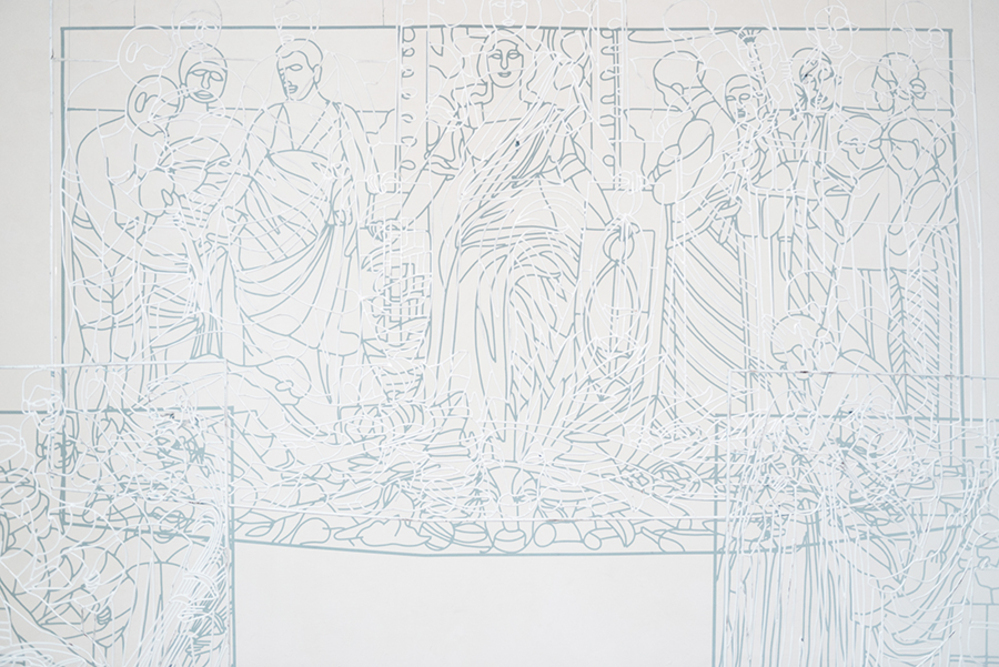
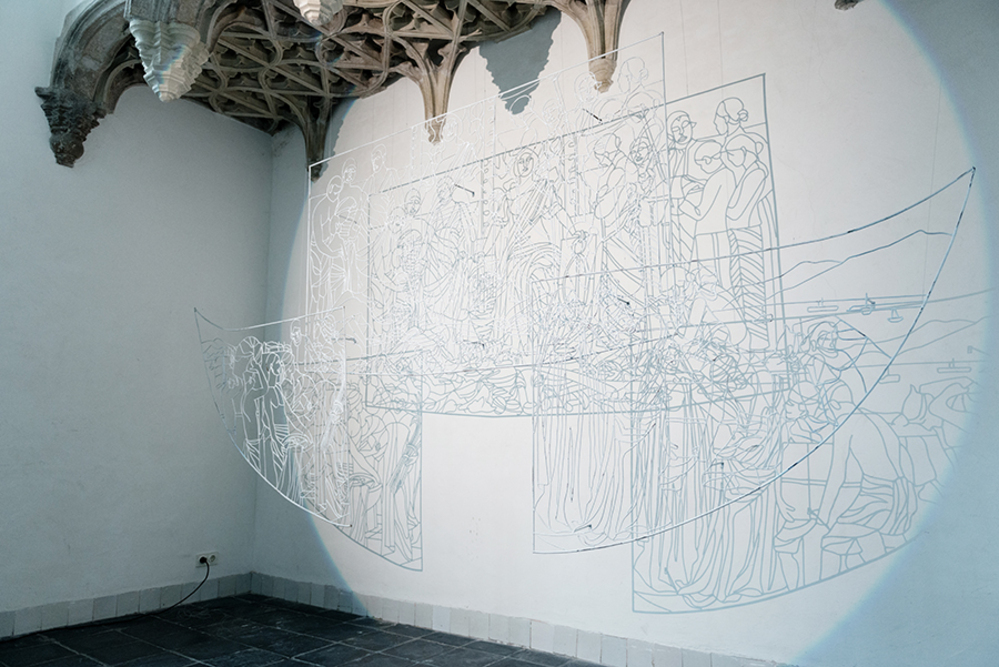
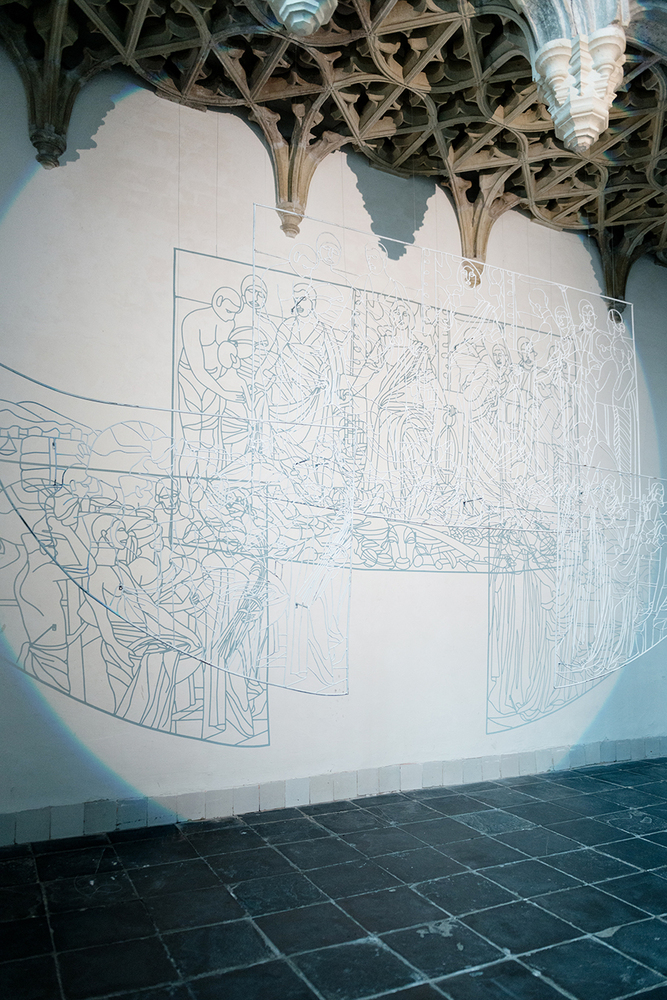
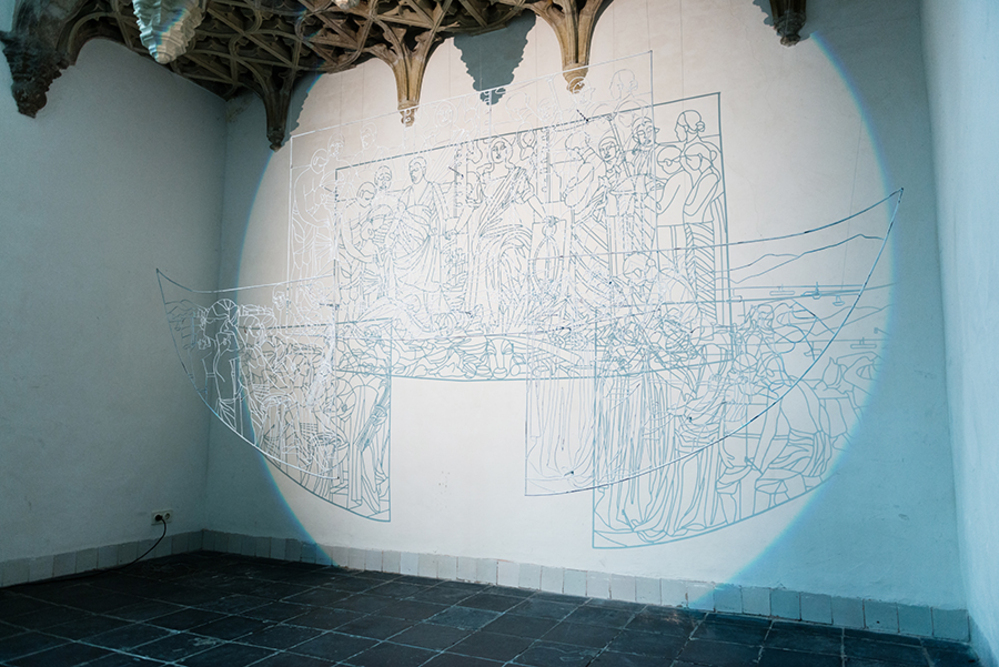
Indonesian artist Iswanto Hartono 's work 'Colonies' is an installation inspired by the image of the 'Homage of the Colonies' panel on the left side of the Golden Coach and was on display in the Holy Sepulchre Chapel. It depicts half-naked people from the Dutch colonies offering products from the colonies to the Dutch Virgin, who is seated in the centre. On the left are people from Suriname and the Antilles, on the right are people from Indonesia. For his work 'Colonies', Iswanto Hartono recreated the lines of the panel in steel wire, painted with white enamel paint. It was shone on with a spotlight, revealing its black shadows on the wall. It associated with the shadows of wajang dolls, but also played with the contrast between light and dark, with the shadow of colonialism in the Netherlands and Indonesia today.
Accompanying the work was a soundscape recorded during a church service on the island of Banda. Hartono made the carriage after finding an image of the Golden Coach, and being amazed that it is still used every year in a political context, complete with the king and queen. This made him think more about the relationship between the Netherlands and Indonesia. Most people will not be familiar with the images on the carriage. Who realises that it contains such strong colonial images? Iswanto Hartono showed several site-specific works at the Oude Kerk that explored the relationship between Indonesian history and the iconography of Dutch colonialism.
| Artist | Hartono, Iswanto |
| Period | 29-09-2017 – 14-11-2017 |
| Location | Heiliggraf |
Monuments: Colonies
Indonesian artist Iswanto Hartono 's work 'Colonies' is an installation inspired by the image of the 'Homage of the Colonies' panel on the left side of the Golden Coach and was on display in the Holy Sepulchre Chapel. It depicts half-naked people from the Dutch colonies offering products from the colonies to the Dutch Virgin, who is seated in the centre. On the left are people from Suriname and the Antilles, on the right are people from Indonesia. For his work 'Colonies', Iswanto Hartono recreated the lines of the panel in steel wire, painted with white enamel paint. It was shone on with a spotlight, revealing its black shadows on the wall. It associated with the shadows of wajang dolls, but also played with the contrast between light and dark, with the shadow of colonialism in the Netherlands and Indonesia today.
Accompanying the work was a soundscape recorded during a church service on the island of Banda. Hartono made the carriage after finding an image of the Golden Coach, and being amazed that it is still used every year in a political context, complete with the king and queen. This made him think more about the relationship between the Netherlands and Indonesia. Most people will not be familiar with the images on the carriage. Who realises that it contains such strong colonial images? Iswanto Hartono showed several site-specific works at the Oude Kerk that explored the relationship between Indonesian history and the iconography of Dutch colonialism.
Gallery
Connections
Part of
Read more
Identifiers and references
| Oude kerk Adlib Collect priref | 2153 |