Red Window Conversations: Red Window Conversations: Red Light Heritage
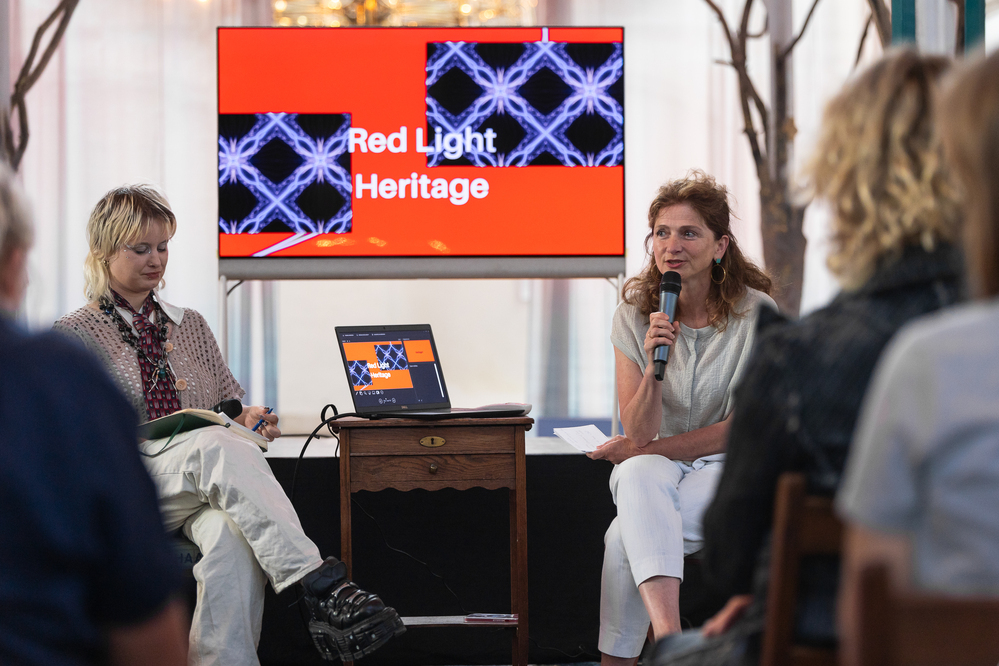
In 2018, the installation of a red stained-glass window in one of the Oude Kerk's chapels caused a fierce public debate and a years-long legal dispute. The commotion surrounding the work Anastasis by artist Giorgio Andreotta Calò raised the question of how contemporary art fits into an ancient monument. Since then, every year, on the longest day of the year, we talk about the relationship between heritage and art.
This edition, we zoomed out and delved deeper into the neighbourhood, together with curator Marianna van der Zwaag and guest curator Julia Visser of Red Light Heritage . We talk about the historical presence of sex work in the neighbourhood, how it is under pressure, and how the claim to heritage by local sex workers and sex work activists challenges current understandings of heritage.
The public space around the Oude Kerk is an urban weave of choices and nurture. Just as the Oude Kerk carries with it many layers of (im)material heritage, we find the same in the cultural-historical context of the neighbourhood. Which aspects of culture we classify as heritage is always in flux and brings with it emotions. According to the municipality and the most recent inner city approach plan, the inner city should become a place where heritage is cherished and cultural innovation is embraced. However, with stricter regulations around opening hours and façade advertising and plans for an erotic centre outside the city, the historical presence of sex work in the area is under pressure. What is allowed to belong and what should make way? Can the perspective of heritage help preserve the legacy of sex work in the Red Light District?
On 21 June, we will delved deeper into the question of heritage with, among others, guest curator Julia Visser of Red Light Heritage. Anthropologist Mary Douglas published her famous work Purity & Danger in 1966. In it, she argues that what is classified as 'dirt' changes per local context. Muddy boots, for example, are not dirty when they are in the garden, but they are in the bathroom. According to the curators we also see this reflected in current tensions in the neighbourhood. We see some aspects of heritage as undesirable in the city centre and should be moved outside or should not belong. In other words, heritage also seems to be a moral issue. Even during the discussions about the placement of the Red Window in the Oude Kerk, there was a sense that a hard line was being crossed here. Where does this feeling of being around heritage come from today? And who decides what should or should not belong?
| Artist | Red Light Heritage Torres, Anna Sikkema, Amber |
| Performer | Custódio, Angelo |
| Curator | Zwaag, Marianna van der Visser, Julia |
| Period |
21st century
(21-06-2023) |
| Location | Heiliggraf |
Red Window Conversations: Red Window Conversations: Red Light Heritage
In 2018, the installation of a red stained-glass window in one of the Oude Kerk's chapels caused a fierce public debate and a years-long legal dispute. The commotion surrounding the work Anastasis by artist Giorgio Andreotta Calò raised the question of how contemporary art fits into an ancient monument. Since then, every year, on the longest day of the year, we talk about the relationship between heritage and art.
This edition, we zoomed out and delved deeper into the neighbourhood, together with curator Marianna van der Zwaag and guest curator Julia Visser of Red Light Heritage . We talk about the historical presence of sex work in the neighbourhood, how it is under pressure, and how the claim to heritage by local sex workers and sex work activists challenges current understandings of heritage.
The public space around the Oude Kerk is an urban weave of choices and nurture. Just as the Oude Kerk carries with it many layers of (im)material heritage, we find the same in the cultural-historical context of the neighbourhood. Which aspects of culture we classify as heritage is always in flux and brings with it emotions. According to the municipality and the most recent inner city approach plan, the inner city should become a place where heritage is cherished and cultural innovation is embraced. However, with stricter regulations around opening hours and façade advertising and plans for an erotic centre outside the city, the historical presence of sex work in the area is under pressure. What is allowed to belong and what should make way? Can the perspective of heritage help preserve the legacy of sex work in the Red Light District?
On 21 June, we will delved deeper into the question of heritage with, among others, guest curator Julia Visser of Red Light Heritage. Anthropologist Mary Douglas published her famous work Purity & Danger in 1966. In it, she argues that what is classified as 'dirt' changes per local context. Muddy boots, for example, are not dirty when they are in the garden, but they are in the bathroom. According to the curators we also see this reflected in current tensions in the neighbourhood. We see some aspects of heritage as undesirable in the city centre and should be moved outside or should not belong. In other words, heritage also seems to be a moral issue. Even during the discussions about the placement of the Red Window in the Oude Kerk, there was a sense that a hard line was being crossed here. Where does this feeling of being around heritage come from today? And who decides what should or should not belong?
Gallery
Connections
Part of
Read more
Identifiers and references
| Oude kerk Adlib Collect priref | 2340 |