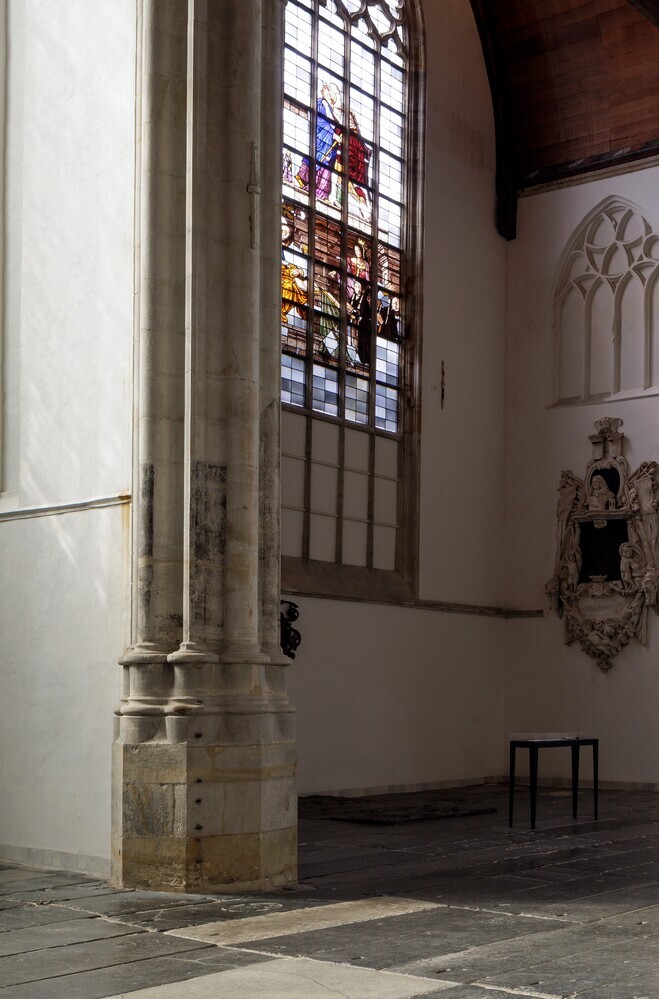
Lysbeth and her husbands
Lysbeth had the chapel built after Gaeff's death, when she had meanwhile remarried [Willem Andriesz]. He was an influential man who was mayor of Amsterdam several times during the period when the side chapels of the Oude Kerk, to which this chapel also belongs, were built, between 1493 and 1510. Lysbeth and Willem are buried side by side in the chapel, their tombstones bearing the Van Outshoorn coat of arms.
Although the chapel was primarily Lysbeth's initiative, Willem also had an interest in its construction. After all, such church building projects offered an excellent opportunity to raise social prestige and radiate well-being as mayor. The
Hamburgerkapel
and
Weitkoperskapel
also came about in a similar way, through the initiatives of other mayors.
The Consequences of the "
Beeldenstorm
"
In Catholic times, the Oude Kerk housed numerous statues of saints and
altars
dedicated to specific saints. These did not survive the Beeldenstorm - a period of iconoclast outbreaks throughout Northern Europe - and the subsequent
Alteration
. For Protestants, richly decorated altars and statues of saints were considered idolatry; they sought a sober church interior that would not distract attention from worship.
Using historical sources, we have largely succeeded in reconstructing which statues and altars were located in different places in the church. Originally, the Lysbeth Gavenkapel housed the Resurrection Altar, and the official name of the chapel was therefore the Resurrection Chapel. The current name originated popularly. The chapel was also called the "Choir of the Tenth Mass", because mass was read here daily at ten o'clock.
Minimise the description