Come Closer: Come Closer: Performance Raoni Muzho Saleh
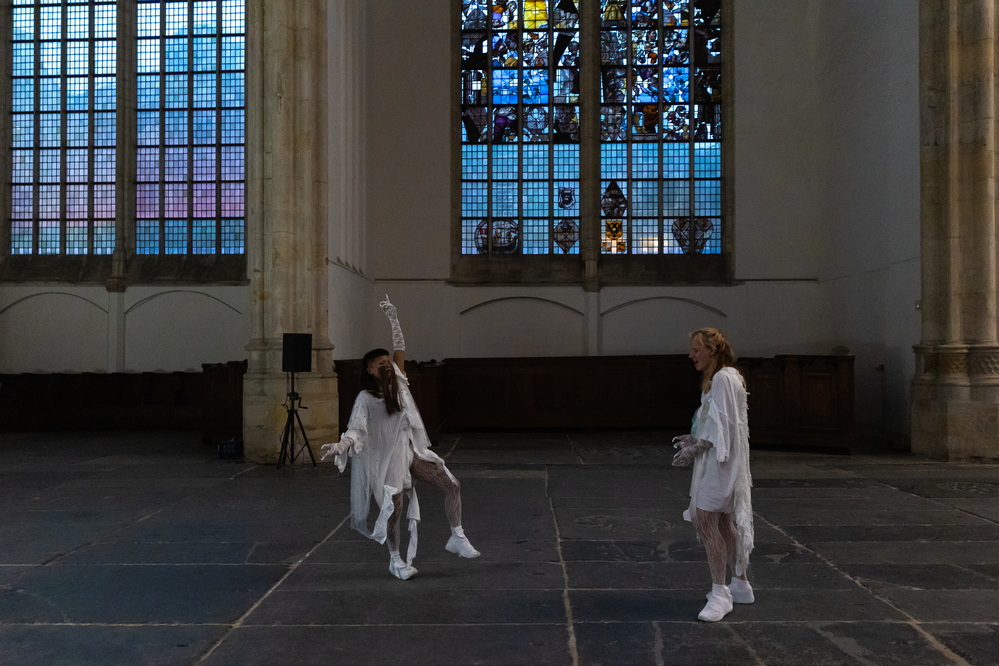
A new performance by Raoni Muzho Saleh called 'a mother's wail flung from one throat to the other'. When a mother has nothing else to combat the barbarity of the suffering she endures, she finds in her wailing voice the strength to protest. In this performance, Laima Jaunzema and Raoni Muzho Saleh, as Dyva and Lashes, are engaged in a relationship of call and response, of shouting and answering, where a mother's wail is hurled from one throat to the other.
Inspired by the late Gloria E. Anzaldúa (Borderlands / La Frontera: The New Mestiza) and the late Agha Shahid Ali (Call me Ishmael Tonight: A Book of Ghazals) - writers who have both engaged poetically with the attraction of grief for loss and praise for love that remains dormant - this performance was the embodiment of a wailing ghazal (غَزَلَ, ghazala) dedicated to five different depictions of the sacred mother, namely the mother who lost her children, the whore mother, the Black mother, the exiled mother, and the raped mother . The ghazal, as a love poem derived from Arabic poetry, is a poetic expression of both the pain of loss or separation and the beauty of love despite that pain.
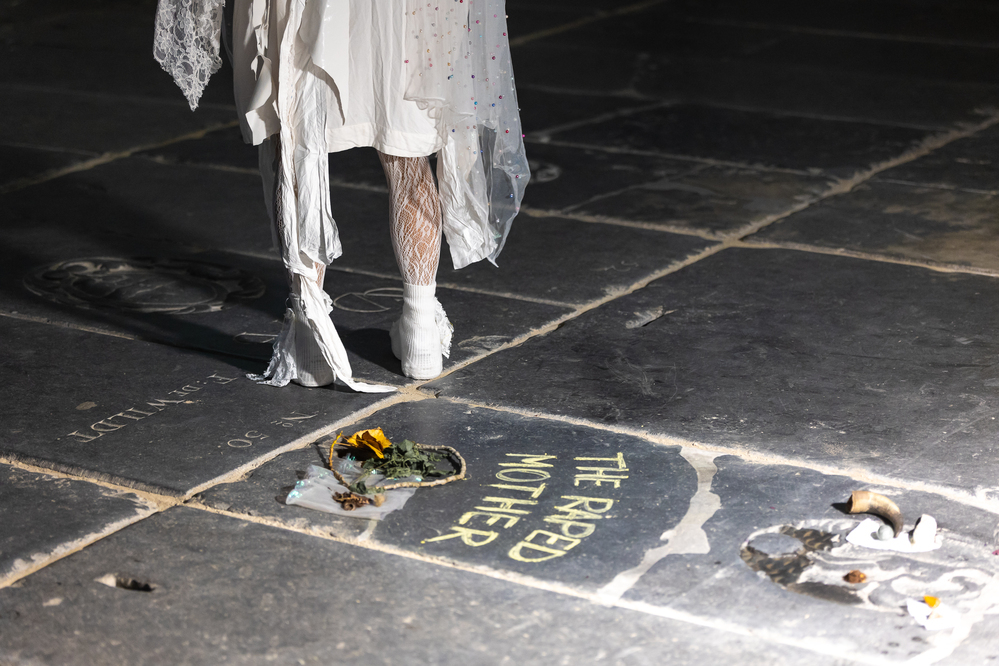
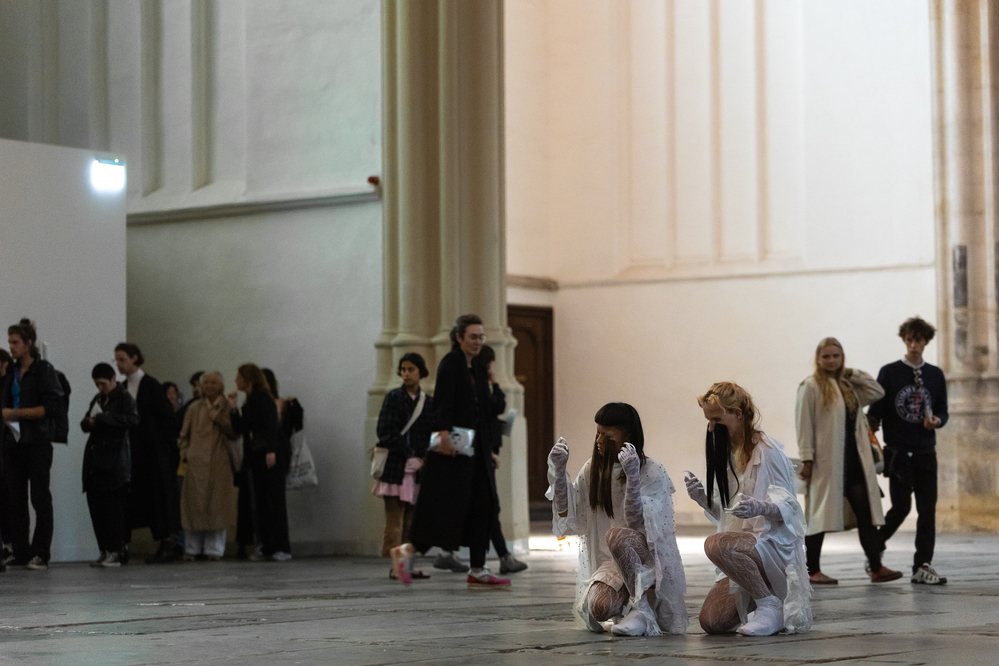
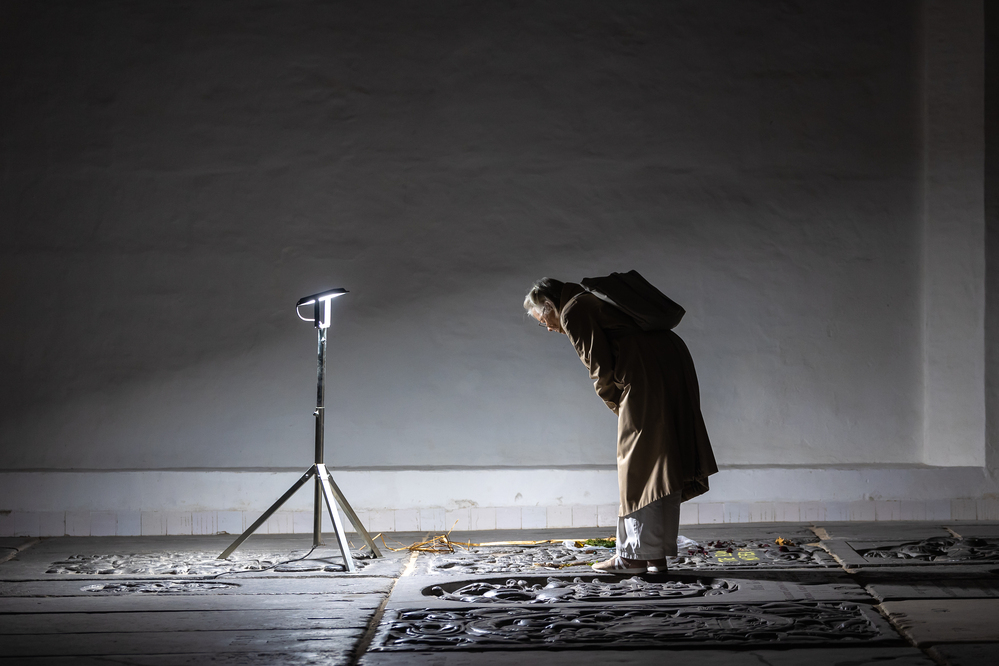
In this performance, the ghazal not only served as the textual basis from which Lashes and Dyva plunged into a deep pit of wailing reverberation, but the ghazal, which means spinning, was also materialised physically as the collective body - of performers and audience - made a slow turn around the church. Through a sonic and physical exploration of the groans in their calls and responses, Dyva and Lashes aimed to fill the space with shuddering images of the five mothers' wails marking the listener's hearing. The performance took place t WIC e, lasting about 50 minutes, with the audience following the slow movement of the two wailing performers through the church and a full circle around the church during one performance. Five graves were marked with chalk, dedicated to the five mothers; adding small objects made the graves look like an altar. Beforehand, Radna Rumping gave an introduction in the Sebastian Chapel and the audience was asked to write down the name of a mother figure on a note; upon entering, these notes were placed one by one in a bowl of water. After the performance, the audience could stay for a while to tour the church and take a closer look at the tombs with altars . This performance was a follow-up to the private Mourning Sociality that had taken place on 20 September led by Raoni Muzho Saleh with a small audience.
| Artist | Saleh, Raoni/Muzho |
| Performer | Jaunzema, Laima |
| Curator | Rumping, Radna |
| Period | 24-09-2021 |
| Location | Noorderzijbeuk |
Come Closer: Come Closer: Performance Raoni Muzho Saleh
A new performance by Raoni Muzho Saleh called 'a mother's wail flung from one throat to the other'. When a mother has nothing else to combat the barbarity of the suffering she endures, she finds in her wailing voice the strength to protest. In this performance, Laima Jaunzema and Raoni Muzho Saleh, as Dyva and Lashes, are engaged in a relationship of call and response, of shouting and answering, where a mother's wail is hurled from one throat to the other.
Inspired by the late Gloria E. Anzaldúa (Borderlands / La Frontera: The New Mestiza) and the late Agha Shahid Ali (Call me Ishmael Tonight: A Book of Ghazals) - writers who have both engaged poetically with the attraction of grief for loss and praise for love that remains dormant - this performance was the embodiment of a wailing ghazal (غَزَلَ, ghazala) dedicated to five different depictions of the sacred mother, namely the mother who lost her children, the whore mother, the Black mother, the exiled mother, and the raped mother . The ghazal, as a love poem derived from Arabic poetry, is a poetic expression of both the pain of loss or separation and the beauty of love despite that pain.
In this performance, the ghazal not only served as the textual basis from which Lashes and Dyva plunged into a deep pit of wailing reverberation, but the ghazal, which means spinning, was also materialised physically as the collective body - of performers and audience - made a slow turn around the church. Through a sonic and physical exploration of the groans in their calls and responses, Dyva and Lashes aimed to fill the space with shuddering images of the five mothers' wails marking the listener's hearing. The performance took place t WIC e, lasting about 50 minutes, with the audience following the slow movement of the two wailing performers through the church and a full circle around the church during one performance. Five graves were marked with chalk, dedicated to the five mothers; adding small objects made the graves look like an altar. Beforehand, Radna Rumping gave an introduction in the Sebastian Chapel and the audience was asked to write down the name of a mother figure on a note; upon entering, these notes were placed one by one in a bowl of water. After the performance, the audience could stay for a while to tour the church and take a closer look at the tombs with altars . This performance was a follow-up to the private Mourning Sociality that had taken place on 20 September led by Raoni Muzho Saleh with a small audience.
Gallery
Connections
Part of
Read more
Identifiers and references
| Oude kerk Adlib Collect priref | 2256 |