Middenschip: Pulpit in kwab style
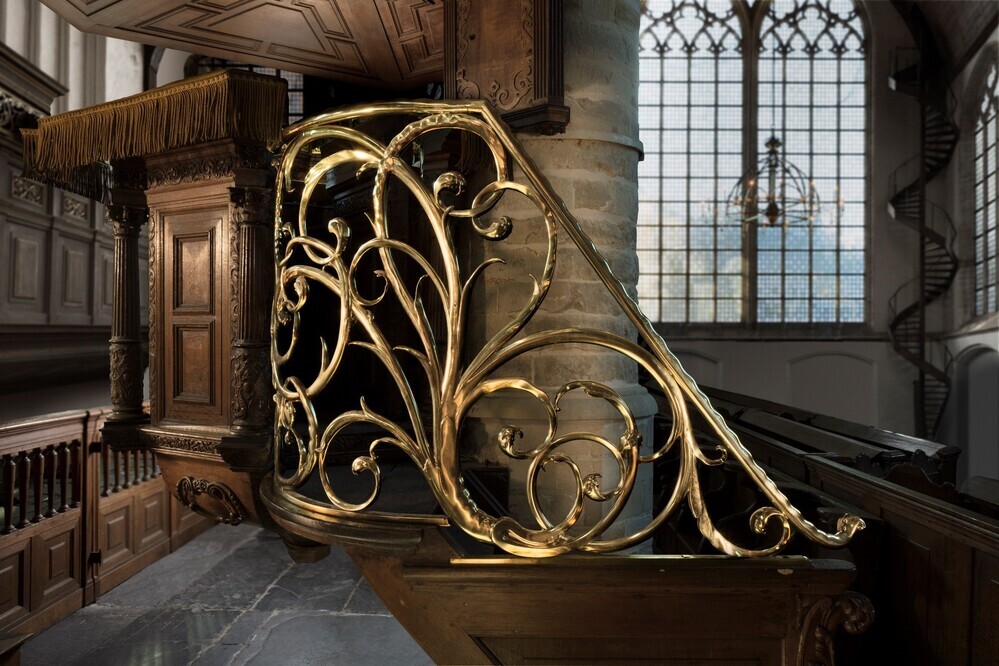
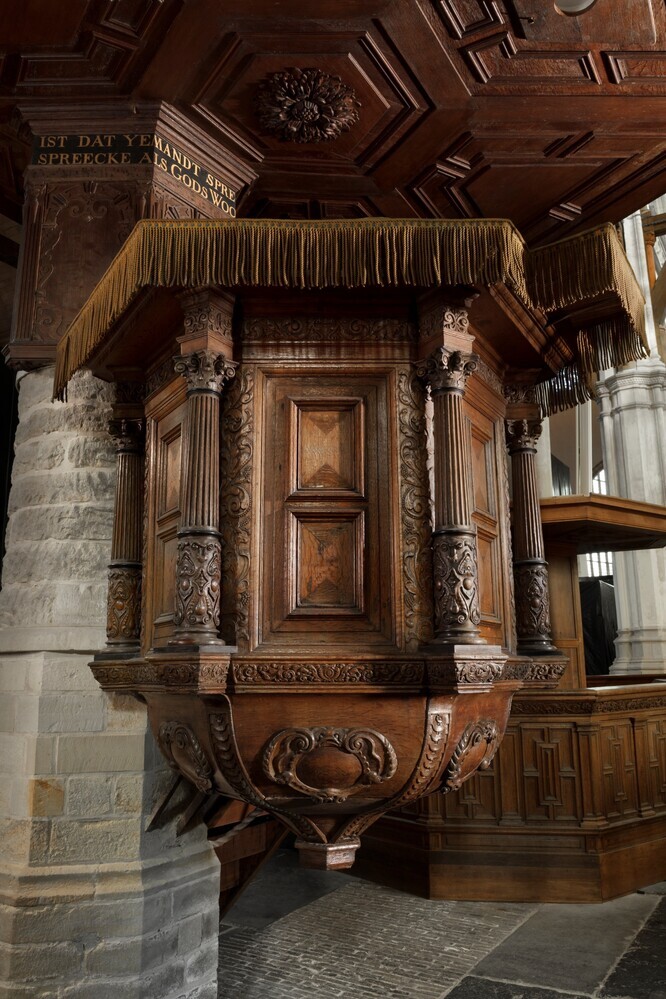
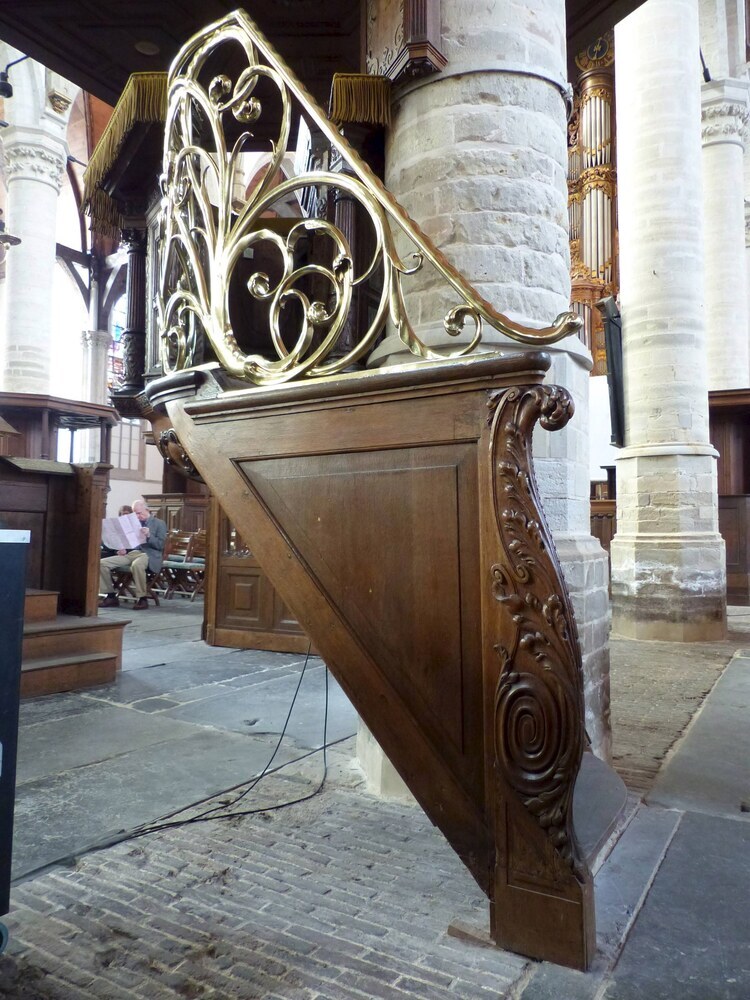
Since 1642, this hexagonal pulpit has been located at the heart of the Oude Kerk. After the Protestant Reformation in 1578, attention for the spoken word of the preacher increased. For that reason, coffin maker Jan Pieters was commissioned to design a new pulpit. He did so in collaboration with woodcarver Nicasius van Eyckelsbeeck . This duo is also responsible for the pews surrounding the pulpit, the so-called mayor’s pews. The brass balustrade was added by Joost Gerritsz , who also made the design for the Lectern in kwab style .
What is the kwab style?
The kwab style is characterized by organic, pleated forms with flowing contours and an almost slimy appearance. This dynamic style contrasts sharply with the classical, symmetrical designs of the same period. In seventeenth-century Holland, appreciation grew for this bold style, which was increasingly used in decorative art and architecture. Other objects in kwab style can be found in the church, such as the Lectern in kwab style .
| Artist | Pietersz., Jan Eyckelsbeeck, Nicasius van Joost Gerritsz. |
| Period | 17th century |
| Location | Middenschip |
| Material | ebony messing |
Middenschip: Pulpit in kwab style
Since 1642, this hexagonal pulpit has been located at the heart of the Oude Kerk. After the Protestant Reformation in 1578, attention for the spoken word of the preacher increased. For that reason, coffin maker Jan Pieters was commissioned to design a new pulpit. He did so in collaboration with woodcarver Nicasius van Eyckelsbeeck . This duo is also responsible for the pews surrounding the pulpit, the so-called mayor’s pews. The brass balustrade was added by Joost Gerritsz , who also made the design for the Lectern in kwab style .
What is the kwab style?
The kwab style is characterized by organic, pleated forms with flowing contours and an almost slimy appearance. This dynamic style contrasts sharply with the classical, symmetrical designs of the same period. In seventeenth-century Holland, appreciation grew for this bold style, which was increasingly used in decorative art and architecture. Other objects in kwab style can be found in the church, such as the Lectern in kwab style .
Gallery
Connections
Part of
Read more
Identifiers and references
| Oude kerk Adlib Collect priref | 1864 |