Geometry of the Scattering
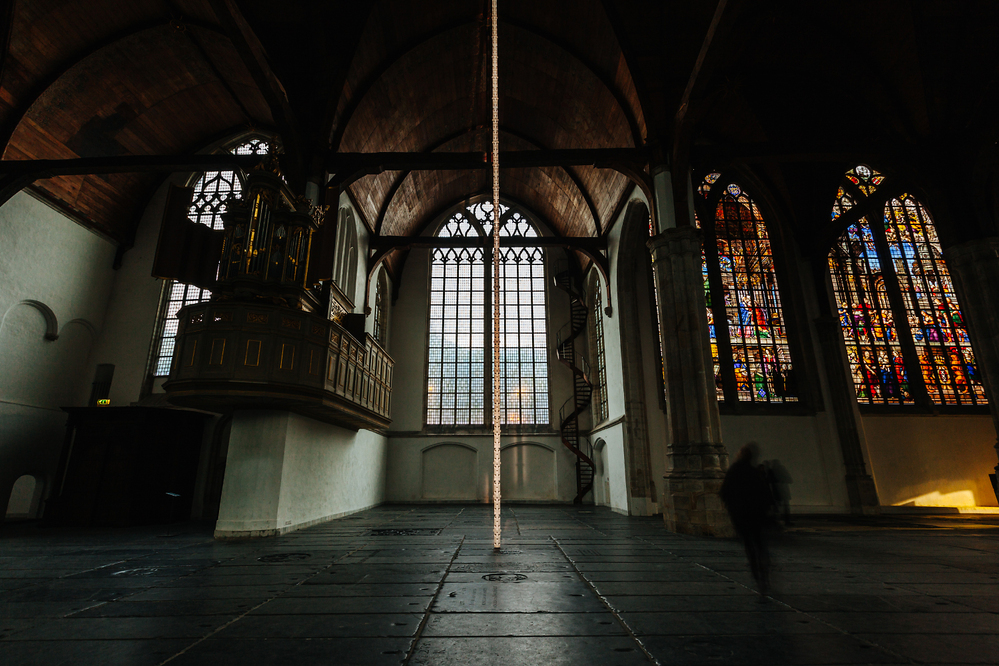
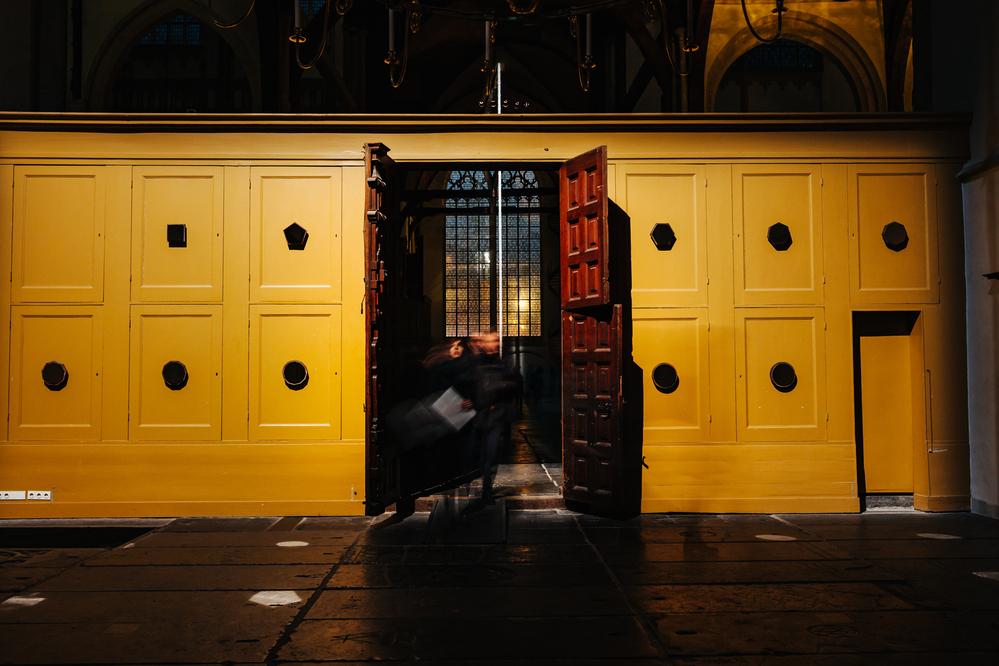
The language of simple geometric forms, such as circles and squares, is deeply rooted in the history of ideas, religion, and art. Making use of these forms for her subtle interventions, Germaine Kruip ’s work at the Oude Kerk exposed historical and cultural phenomena, such as the impact of traditions and rituals, culminating in bewildering abstractions of light and space. Kruip’s abstraction created a link to the contemplative character of the Oude Kerk, wherein the viewer became the actual agent of the work.
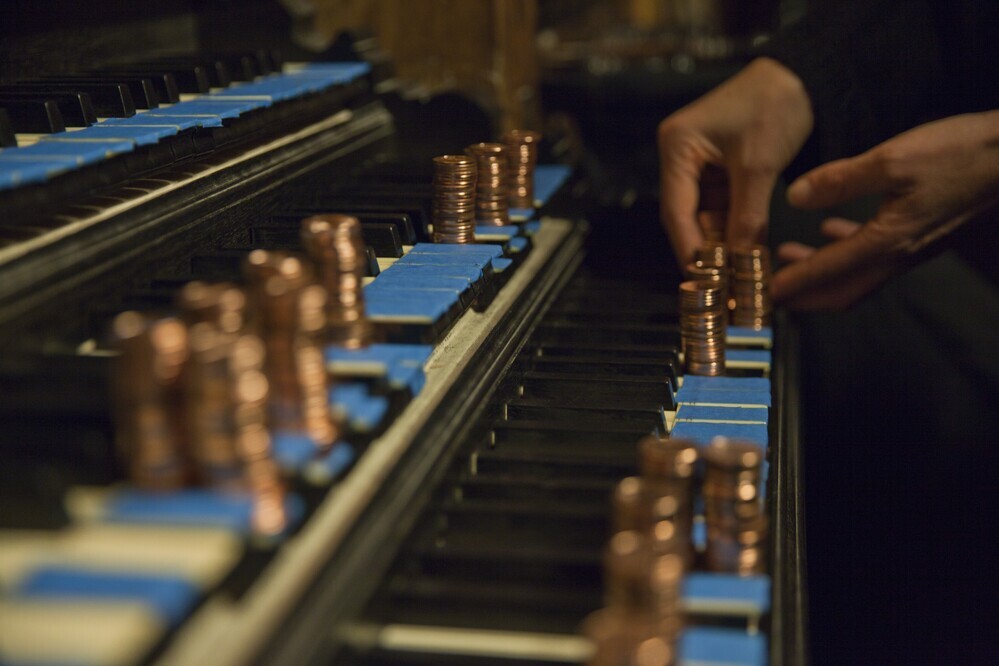
Kruip's intervention started with The Entrance : a 2½-hour live performance that took place at the opening during the Amsterdam Art Weekend 2015. The pieces of music performed on the Vater-Müller organ were compact and repetitive, an effect enhanced by piles of coins on the organ's keys. Live footage of the performance was shown on the Zuiderportaal via a camera/beamer on a small monitor. The residue of the performance could be heard in the church during the exhibition period through loudspeakers that played louder and louder as the day progressed.
Also on display were Kannadi (from Square to Circle), the performance A Square Spoken, Column Untitled , Simultaneous Contrast, and Marble Untitled (2009).
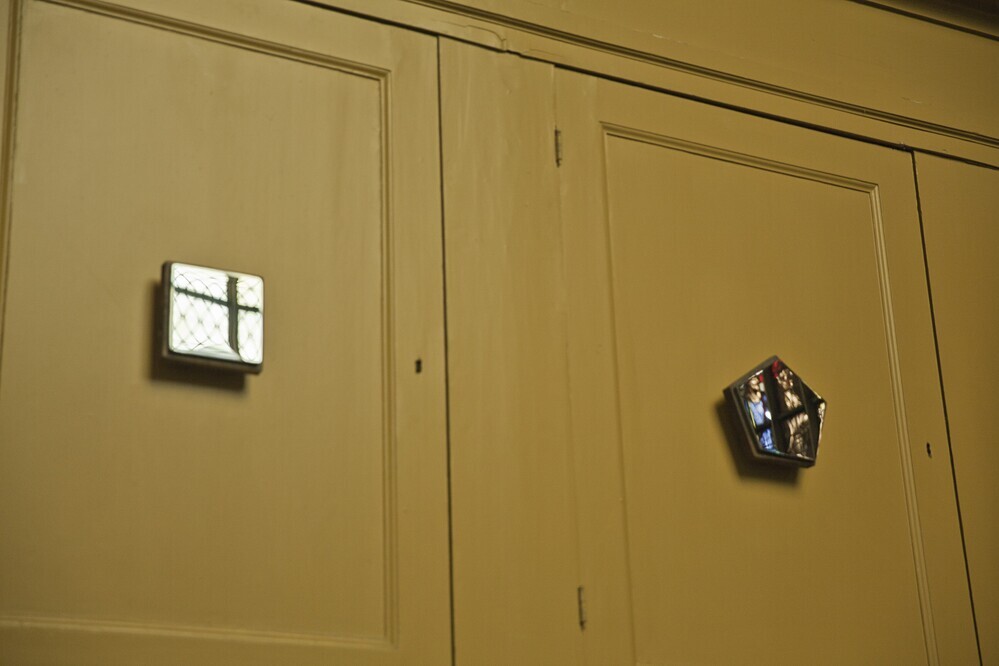
Kannadi (from Square to Circle) originated in the village of Aranmula in India. Kruip asked the craftsmen there not to make a circular mirror but a square one for once. Throughout spiritual and ritual history, the circle has been a symbol of the status of higher consciousness. Besides this being merely a subtle change, this simple intervention produced 11 new mirrors that were impactfully incorporated into the architecture of the Oude Kerk.
The square, once a Modernist symbol, was central to the performance A Square Spoken. In the history of the square, Kruip suggests, we recognise the passage of time and the mutability of our perception. The performance, in the form of an intense conversation, captures the square as a window to the soul. This animated conversation between two people reflected the inward-looking transcendent gaze.
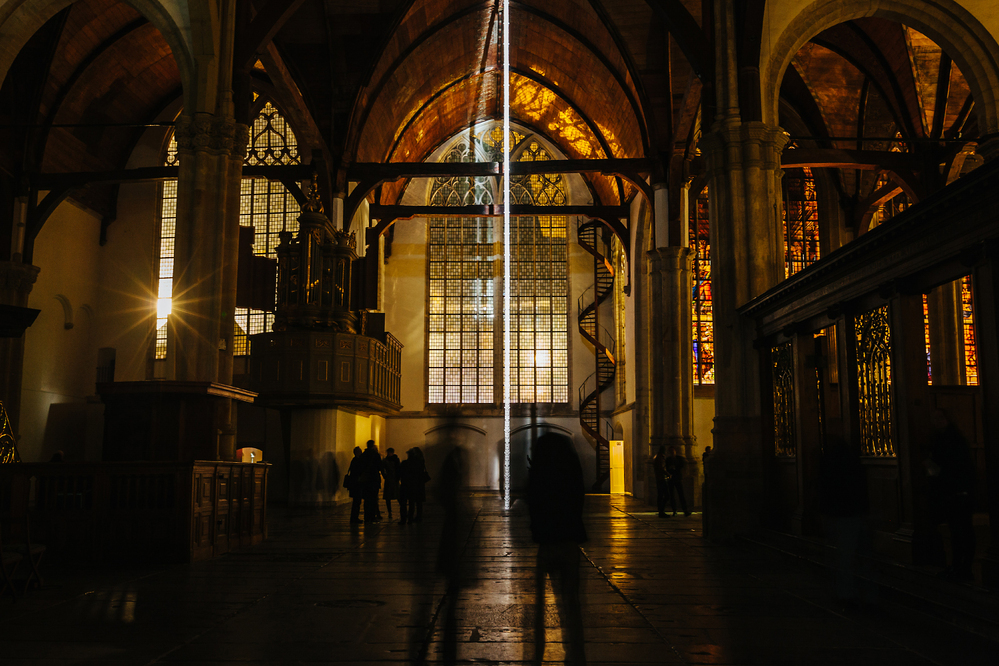
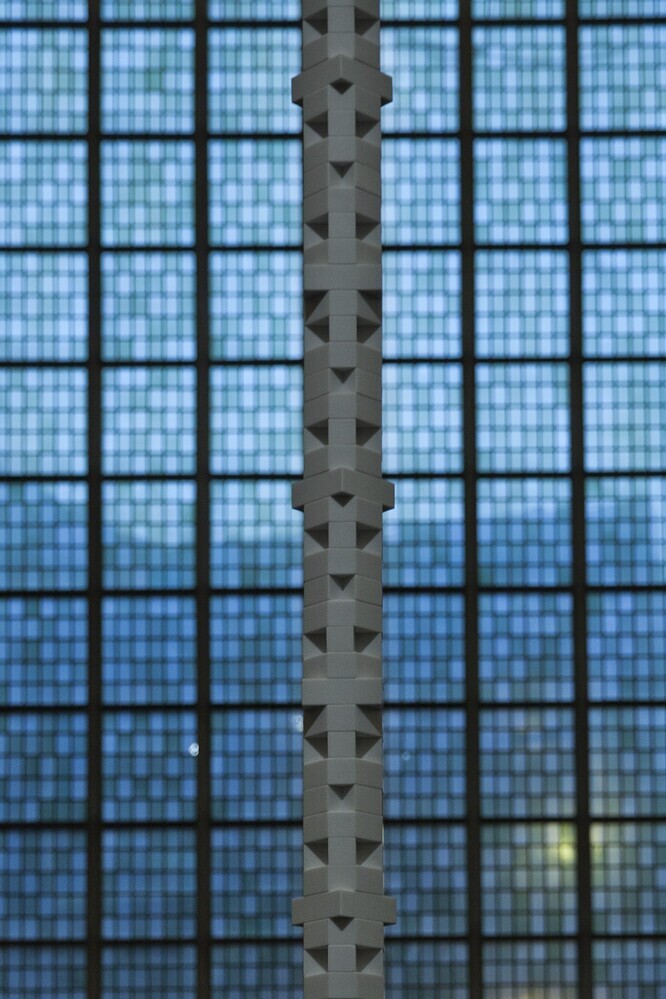
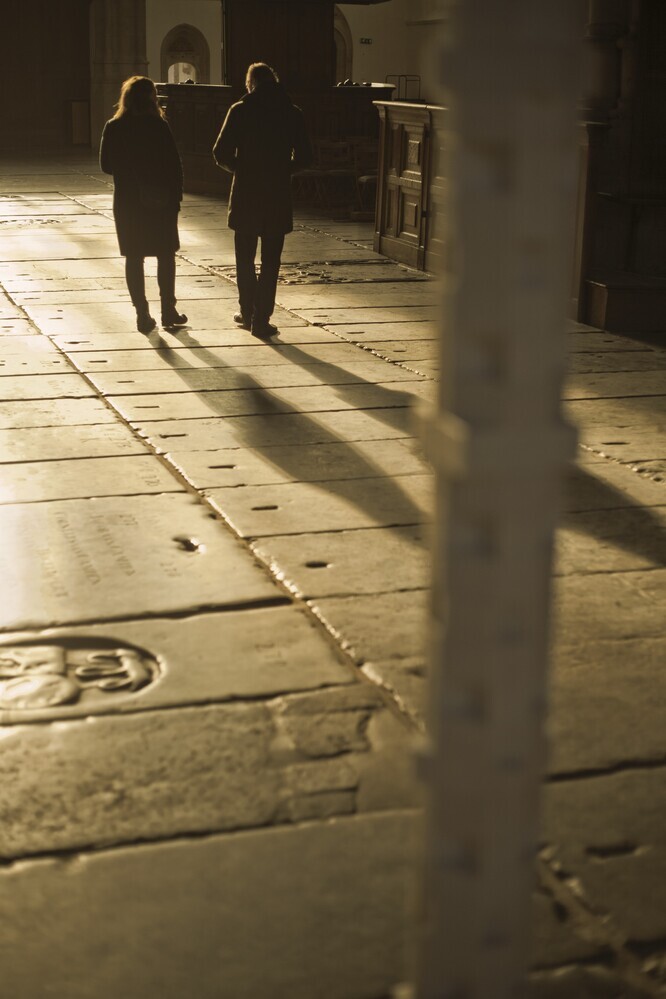
In the St George's Chapel, Column Untitled, an 18-metre-high column between the roof vaults and the tombstone floor, alluded to infinity. Simultaneous Contrast exposed a series of 'blind spots' and Marble Untitled from 2009, a thin slab of marble, was recontextualised.
| Artist | Kruip, Germaine |
| Curator | Grandjean, Jacqueline |
| Period |
21st century
(25-11-2015 – 27-03-2016) |
| Location | Oude Kerk |
Geometry of the Scattering
The language of simple geometric forms, such as circles and squares, is deeply rooted in the history of ideas, religion, and art. Making use of these forms for her subtle interventions, Germaine Kruip ’s work at the Oude Kerk exposed historical and cultural phenomena, such as the impact of traditions and rituals, culminating in bewildering abstractions of light and space. Kruip’s abstraction created a link to the contemplative character of the Oude Kerk, wherein the viewer became the actual agent of the work.
Kruip's intervention started with The Entrance : a 2½-hour live performance that took place at the opening during the Amsterdam Art Weekend 2015. The pieces of music performed on the Vater-Müller organ were compact and repetitive, an effect enhanced by piles of coins on the organ's keys. Live footage of the performance was shown on the Zuiderportaal via a camera/beamer on a small monitor. The residue of the performance could be heard in the church during the exhibition period through loudspeakers that played louder and louder as the day progressed.
Also on display were Kannadi (from Square to Circle), the performance A Square Spoken, Column Untitled , Simultaneous Contrast, and Marble Untitled (2009).
Kannadi (from Square to Circle) originated in the village of Aranmula in India. Kruip asked the craftsmen there not to make a circular mirror but a square one for once. Throughout spiritual and ritual history, the circle has been a symbol of the status of higher consciousness. Besides this being merely a subtle change, this simple intervention produced 11 new mirrors that were impactfully incorporated into the architecture of the Oude Kerk.
The square, once a Modernist symbol, was central to the performance A Square Spoken. In the history of the square, Kruip suggests, we recognise the passage of time and the mutability of our perception. The performance, in the form of an intense conversation, captures the square as a window to the soul. This animated conversation between two people reflected the inward-looking transcendent gaze.
In the St George's Chapel, Column Untitled, an 18-metre-high column between the roof vaults and the tombstone floor, alluded to infinity. Simultaneous Contrast exposed a series of 'blind spots' and Marble Untitled from 2009, a thin slab of marble, was recontextualised.
Gallery
Connections
Explore the elements of the work
Read more
Read more
Read more
Read more
Read more
Read more
Identifiers and references
| Oude kerk Adlib Collect priref | 2137 |